
How Microplastics Form: The Science Behind Plastic Fragmentation
Microplastics — plastic particles smaller than 5 millimetres — have become one of the most pervasive environmental contaminants on Earth. They have been detected in the deepest ocean trenches, in Arctic ice cores, in rainwater, in human blood, and in the placentas of unborn children. But where do they come from? Understanding how microplastics form is essential to tackling the broader microplastics crisis. The answer lies in two distinct pathways: some particles are manufactured at microscopic size from the outset, while others result from the gradual physical and chemical breakdown of larger plastic objects.
This distinction — between primary and secondary microplastics — shapes how scientists study pollution sources, how policymakers draft regulations, and how effectively we can intervene. Both categories are growing in volume, and both present serious risks to ecosystems and human health.

Primary Microplastics: Engineered to Be Small
Primary microplastics are intentionally manufactured at a small size. They are not the result of degradation — they enter the environment already in microplastic form. Several major industrial and consumer categories fall under this definition.
Microbeads are spherical plastic particles, typically made from polyethylene or polypropylene, that were widely used as exfoliating agents in cosmetic products such as facial scrubs, toothpastes, and shower gels. A single product could contain up to 300,000 microbeads per tube. Because they are too small to be captured by most wastewater treatment filters, they pass directly into rivers and oceans. Many countries, including the UK, US, Canada, and EU member states, have now banned microbeads in rinse-off cosmetics, but legacy contamination persists and enforcement varies globally.
Nurdles — also called pre-production pellets or plastic resin pellets — are the raw material from which virtually all plastic products are made. These lentil-sized granules are produced by chemical and petrochemical companies and shipped in bulk to manufacturers worldwide. Spillages during production, transport, and processing are extremely common. A 2020 study estimated that between 53 billion and 176 billion nurdles are lost to the environment in the UK alone each year. Once released, their smooth, buoyant surface makes them highly mobile in aquatic environments, where they can travel thousands of kilometres.

Industrial abrasives and blasting media made from plastic are used in surface preparation and cleaning processes. These particles are often released directly into the environment during outdoor applications or via inadequate waste management.
Synthetic fibres used in the textile industry represent another significant primary source. Fibres shed during manufacturing — before products even reach consumers — contribute measurably to industrial wastewater pollution.
Secondary Microplastics: How Larger Plastics Break Down
Secondary microplastics are by far the dominant source globally. They originate from the physical, chemical, and biological degradation of larger plastic items — packaging, bottles, bags, fishing nets, agricultural films, and countless other products. Rather than entering the environment as microplastics, they begin as macroplastics and fragment over time into progressively smaller pieces.
This fragmentation does not happen uniformly or according to a fixed timetable. It depends on the type of polymer, the conditions of exposure, the presence of mechanical stress, and a range of environmental variables. Several processes drive secondary microplastic formation, each contributing in different proportions depending on the environment.
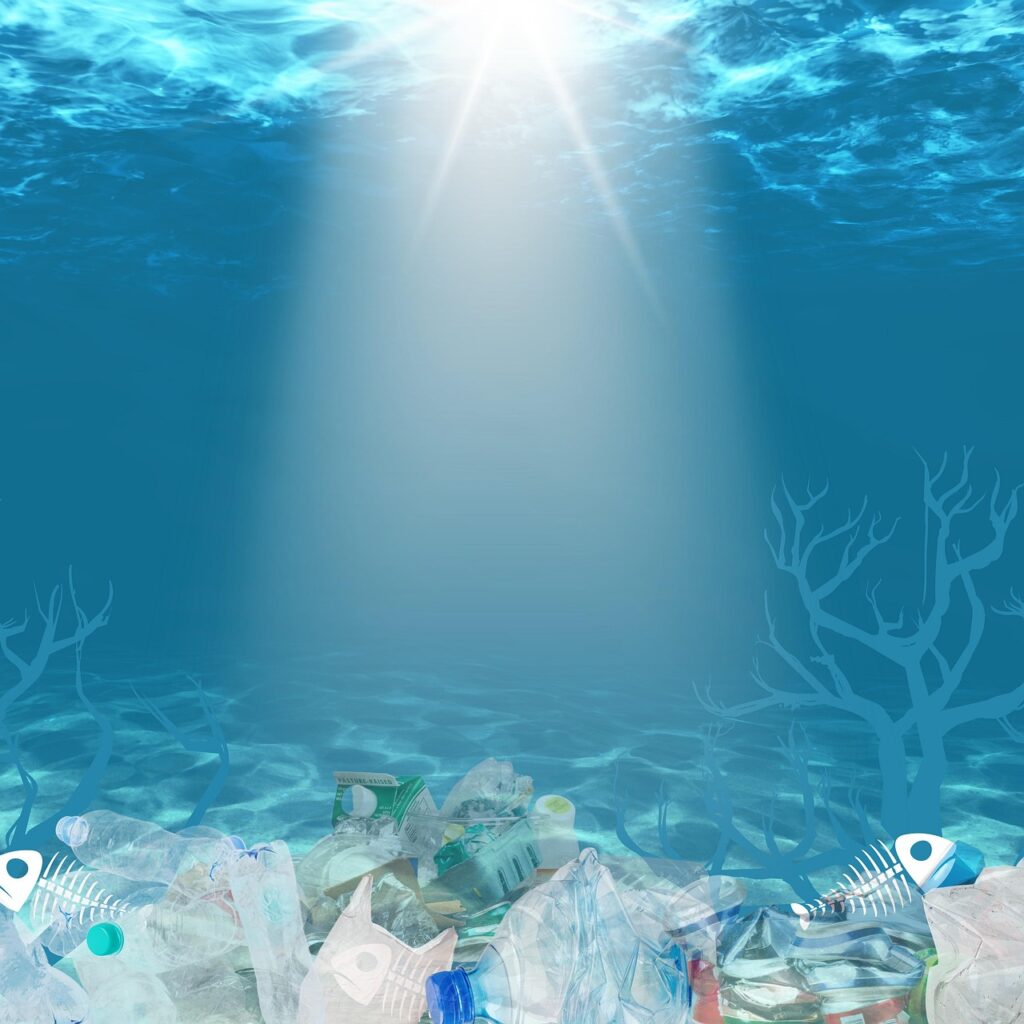
The ocean microplastics problem is largely a secondary microplastics problem: the vast majority of plastic debris found in marine environments consists of fragments that began as larger consumer items and have been progressively broken apart by waves, sunlight, and biological activity.
The Role of UV Radiation in Plastic Degradation
Ultraviolet radiation from sunlight is the primary trigger for photodegradation in plastics. When UV rays strike polymer chains, they break the chemical bonds that hold the long molecular structures together — a process known as photolysis. This causes the plastic to become brittle, discoloured, and structurally weakened. Surface cracking begins to appear, and the material loses its tensile strength.
Different polymers respond at different rates. Polystyrene is particularly vulnerable to UV degradation and can begin to show visible deterioration within weeks of outdoor exposure. Polyethylene and polypropylene are somewhat more resistant but still degrade significantly under prolonged UV exposure. Additives such as UV stabilisers, commonly mixed into plastics during manufacture, slow this process — but do not prevent it entirely.
Once photodegradation has weakened the polymer matrix, mechanical forces can fragment the material far more rapidly than they otherwise could. UV exposure and mechanical stress are therefore strongly synergistic in driving microplastic formation.
Mechanical Fragmentation: Waves, Wind, and Physical Wear
Physical stress — from wave action, abrasion against rocks and sand, turbulence, wind, and the weight of sediment — breaks UV-weakened plastic into smaller and smaller fragments. In marine environments, wave energy is particularly effective at shattering brittle polymer surfaces into particles ranging from millimetres down to the nanoscale.
On beaches, the combination of solar radiation and mechanical abrasion from sand creates a highly efficient fragmentation environment. Studies have shown that plastic bottles left on sandy beaches can produce measurable quantities of microplastic particles within months. Agricultural plastic films, used extensively across Europe and Asia to suppress weeds and retain soil moisture, are particularly prone to mechanical fragmentation in field conditions, where tillage operations physically shred the material into small pieces that are then incorporated into the soil.
Landfills and urban environments also generate microplastics through mechanical wear: plastic bags snagged on fences, packaging abraded by foot traffic, and construction materials exposed to wind and rain all contribute steadily to the environmental load.
Synthetic Textiles: The Hidden Source of Microfibers
Clothing and home textiles made from synthetic fibres — polyester, nylon, acrylic, and their blends — release vast quantities of microfibers during washing. Each wash cycle of a synthetic garment can release between 700,000 and 1.2 million fibres, according to research published by Plymouth University. These fibres, typically less than 1 millimetre in length, pass through most washing machine filters and are only partially captured by municipal wastewater treatment plants.
A 2017 study published in Nature Geoscience estimated that over 700,000 synthetic fibres could be released from a single 6 kg domestic wash load. Globally, fibres from synthetic textiles are estimated to account for approximately 35% of all primary microplastics entering the ocean each year, making them one of the largest identifiable sources.
The problem is compounded by the sheer volume of synthetic textiles now in circulation. Fast fashion has accelerated the production and disposal of polyester-based garments, which now account for more than 60% of global textile output. Dryers also release fibres into the air, contributing to atmospheric microplastic transport. Some municipalities have begun requiring microfibre filters on washing machines, but adoption remains inconsistent.
Tyre Wear Particles: A Major But Overlooked Source
One of the largest and most underappreciated sources of microplastics is the wear of vehicle tyres against road surfaces. Modern tyres are complex composite materials containing synthetic rubbers (including styrene-butadiene rubber), carbon black, and various chemical additives. As tyres wear, they shed particles — sometimes called tyre wear particles or tyre and road wear particles (TRWP) — in a continuous process linked directly to braking, acceleration, and cornering forces.
A 2019 report by the Pew Charitable Trusts estimated that tyre wear is responsible for approximately 28% of microplastic pollution in the ocean, making it the single largest source. In Europe, estimates suggest that between 100,000 and 200,000 tonnes of tyre wear particles are released annually. These particles are swept from road surfaces by rain, transported through stormwater drainage systems, and eventually reach rivers, coastal waters, and the sea.
Unlike fibres or packaging fragments, tyre wear particles contain a complex mixture of chemical compounds, including polycyclic aromatic hydrocarbons (PAHs), zinc, and benzothiazoles, which can be acutely toxic to aquatic organisms. Research published in 2020 in Science linked the compound 6PPD-quinone — a transformation product of a common tyre antiozonant — to mass mortality events in coho salmon in North American urban streams.
How Long Does Plastic Take to Break Down into Microplastics?
Plastic does not biodegrade in any meaningful sense under normal environmental conditions. What occurs instead is a progressive physical and chemical fragmentation that reduces particle size without eliminating the material. A plastic bottle may take 450 years or more to fragment completely into particles too small to measure with conventional methods — and even then, nanoplastics persist.
The timeline varies significantly by polymer and environment. Thin films, such as carrier bags, may begin fragmenting into visible pieces within a few years under sunlight. Expanded polystyrene is notorious for breaking apart rapidly into white beads. High-density polyethylene, used in pipes and heavy-duty containers, may resist fragmentation for decades. In cold, dark, anaerobic conditions — such as deep-sea sediments or landfill cores — plastic can remain structurally intact for much longer still.
What is clear is that fragmentation, once begun, accelerates. As surface area increases, the rate of UV exposure, hydrolysis, and mechanical stress all intensify. A single plastic bottle does not produce one microplastic particle — it produces billions.
Frequently Asked Questions
What is the difference between primary and secondary microplastics?
Primary microplastics are manufactured at microscopic size and include microbeads in cosmetics, industrial plastic pellets (nurdles), and synthetic fibres used in textiles. Secondary microplastics form when larger plastic objects — bottles, bags, packaging, fishing gear — break down through UV radiation, mechanical stress, and chemical processes over time.
What is the biggest source of microplastics in the ocean?
The largest identified sources of ocean microplastics are tyre wear particles (approximately 28% of the total), synthetic textile fibres released during washing (approximately 35% of primary microplastics), and the fragmentation of mismanaged plastic waste. The relative contribution of each source depends on proximity to land, freshwater flows, and local consumption patterns.
How fast does plastic break down into microplastics?
The rate depends heavily on the polymer type and environmental conditions. Thin plastic films can begin fragmenting visibly within months under UV exposure. A standard plastic bottle may take hundreds of years to fully fragment. Cold, dark, or anoxic environments slow degradation significantly, while sunlight and mechanical abrasion accelerate it.
Can microplastics be removed once they form?
Removing microplastics from the environment is extremely difficult and costly. Wastewater treatment plants can capture a significant proportion of particles in sewage sludge, but smaller particles pass through. Ocean clean-up technologies are advancing but remain unable to address diffuse contamination. Prevention — reducing plastic production and improving waste management — remains far more effective than remediation.
Conclusion
Microplastics do not arise from a single process or a single source. They form through a convergence of industrial design choices, consumer habits, waste mismanagement, and the physical chemistry of polymer degradation. Engineered microplastics like nurdles and microbeads represent the most directly controllable sources, and regulatory progress in this area has been real, if incomplete. Secondary microplastics — the products of tyre wear, textile washing, and the slow disintegration of plastic litter — are far harder to address because they are embedded in infrastructure, in material choices, and in patterns of use that extend across the entire economy.
Understanding these formation pathways is not merely an academic exercise. It informs where intervention is most effective, where monitoring is most urgently needed, and why the only durable solution is a structural reduction in plastic production itself.



Leave a Reply