
What is plastic recycling?
Plastic recycling is the process of recovering used plastic waste and reprocessing it into new, usable materials — either the same product (closed-loop) or a different one (open-loop, often called downcycling). It is one of the pillars of the circular economy, the economic model designed to decouple growth from the consumption of finite resources. Rather than extracting virgin fossil feedstocks, recycling recaptures the carbon and energy already embedded in plastics, keeping them in use for as long as technically and economically possible.
According to Plastics Europe, global plastic production reached roughly 413 million tonnes in 2023, with the European Union responsible for about 54 million tonnes. Only a fraction of this volume ever returns to the material loop. Eurostat data for 2022 indicates that the EU generated around 16.1 million tonnes of plastic packaging waste, of which only 40.7% was recycled — a figure that has plateaued in recent years despite ambitious targets set under the EU Packaging and Packaging Waste Regulation (PPWR) and the Waste Framework Directive.
The reasons are complex: plastics are not a single material but a family of chemically distinct polymers, many of which cannot be mixed during reprocessing. Contamination, colour, additives, and multi-layer composites all reduce the value and recyclability of waste streams. Understanding how plastic recycling actually works — and where it fails — is essential for businesses navigating extended producer responsibility (EPR) fees, brand owners pursuing recycled-content commitments, and policy makers designing the next generation of circular regulation.
Types of plastics and their recyclability

Plastics are classified by the Resin Identification Code (RIC), a system introduced by the Society of the Plastics Industry in 1988 and now standardised under ISO 11469 and ASTM D7611. The familiar triangle with a number from 1 to 7 indicates the polymer type — not, as is often misunderstood, whether the item is recyclable in a given municipality.
| Code | Polymer | Typical applications | Recyclability in the EU |
|---|---|---|---|
| 1 — PET | Polyethylene terephthalate | Beverage bottles, food trays, textiles | High (bottle-to-bottle mature) |
| 2 — HDPE | High-density polyethylene | Milk jugs, detergent bottles, pipes | High |
| 3 — PVC | Polyvinyl chloride | Window frames, pipes, flooring | Low (chlorine, additives) |
| 4 — LDPE | Low-density polyethylene | Films, bags, squeeze bottles | Medium (film streams improving) |
| 5 — PP | Polypropylene | Yoghurt pots, caps, automotive parts | Medium-high (rapidly growing) |
| 6 — PS | Polystyrene & EPS | Foam trays, insulation, cutlery | Low (bulky, contamination) |
| 7 — Other | PC, PLA, multilayers, bioplastics | Electronics, packaging, compostables | Very low (mixed stream) |
PET and HDPE are by far the most commercially recycled polymers. A clear, uncoloured PET bottle can be reprocessed into food-grade rPET and returned to the shelf within weeks. At the other extreme, category 7 is a catch-all that includes polycarbonate, nylon, bioplastics such as PLA, and multi-material laminates — all of which disrupt conventional mechanical lines. B2B buyers sourcing secondary polymers through marketplaces like Plastic Trader typically specify not only the RIC code but also melt flow index, colour, moisture, and MFR to guarantee processability.
Why the resin code alone is not enough
Two PET bottles may carry the same “1” symbol yet behave completely differently in a recycling plant. A transparent water bottle with a PP cap and PE-coated label is straightforward; a green oil bottle with a metallised sleeve and silicone valve is a nightmare. Design-for-recycling guidelines published by CEFLEX, RecyClass and the Ellen MacArthur Foundation increasingly take precedence over the generic numeric code.
Mechanical vs chemical recycling
Mechanical recycling is the dominant technology in Europe today, accounting for more than 99% of recycled volumes. Plastic waste is sorted, washed, shredded, melted and extruded into pellets — the regranulate, or recyclate, that converters feed back into new products. The process preserves the polymer chain and is highly energy-efficient: producing one tonne of mechanically recycled PET emits roughly 70% less CO₂ than virgin PET. Its limitations, however, are real: polymers degrade slightly with every heat cycle, colour accumulates, and food-contact applications require very clean input streams.
Chemical recycling — sometimes called advanced or molecular recycling — breaks polymers back down into their monomers or hydrocarbon feedstocks. The main routes are:
- Depolymerisation (glycolysis, methanolysis, hydrolysis) — particularly suited to PET and polyamides.
- Pyrolysis — thermal cracking in the absence of oxygen, yielding pyrolysis oil that can substitute naphtha in steam crackers. Applicable to mixed polyolefins.
- Gasification — high-temperature conversion into syngas.
- Dissolution — a physical process that dissolves the polymer in a solvent to strip additives, without breaking the backbone.
Chemical recycling is positioned as complementary, not competitive: it handles streams that mechanical processes reject — flexible multilayers, coloured PET trays, heavily contaminated post-consumer waste — and produces virgin-equivalent quality suitable for food and pharma. Critics point to high energy intensity, uncertain mass-balance accounting, and the fact that most European capacity is still at pilot or first-commercial scale. The European Commission is expected to clarify the role of chemical recycling in PPWR secondary legislation and in the revision of the End-of-Life Vehicles Regulation.
The recycling process step by step

- Collection. Kerbside schemes, deposit-return systems (DRS), bring-banks and commercial back-of-store collection feed the system. Countries with mature DRS — Germany, Lithuania, the Netherlands — routinely achieve over 90% PET bottle capture.
- Sorting (MRF). Material Recovery Facilities use ballistic separators, near-infrared (NIR) spectroscopy, eddy currents, optical colour sorters and, increasingly, AI-driven robotics to separate polymers by type and colour.
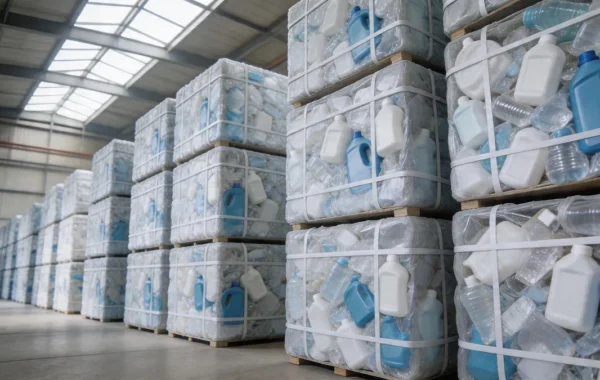
- Baling and trading. Sorted bales are graded according to EN 643-style specifications and traded on B2B markets such as Plastic Trader or odzysk.pro — B2B recyklat, where quality, origin and certification determine price.
- Washing. Hot-wash systems at 80–90 °C with caustic soda remove labels, glues and organic residues. Float-sink tanks separate polymers by density (PET sinks, PE/PP float).
- Shredding and grinding. The clean material is reduced to flakes of 8–12 mm.
- Extrusion and pelletising. Flakes are melted, filtered, degassed and forced through a die to produce uniform pellets. Solid-state polycondensation (SSP) raises the intrinsic viscosity of rPET to food-grade levels.
- Conversion. Pellets re-enter the value chain at injection moulders, blow-moulders, fibre spinners and film extruders.
The whole loop, from consumer bin to new bottle on shelf, can take as little as six weeks in well-optimised closed-loop systems.
Recycling rates in Europe
Europe is a global leader in plastic recycling, but the headline numbers hide substantial variation. According to Eurostat and the European Environment Agency (EEA):
- EU average plastic packaging recycling rate: 40.7% (2022), essentially flat since 2020.
- Top performers: Belgium (~50%), Czechia, the Netherlands and Slovakia, all above 45%.
- Lower performers: Malta, France and several southern member states below 30%.
- PPWR targets: 50% by 2025 and 55% by 2030 for plastic packaging, with binding recycled-content targets of 10–35% in specific applications by 2030 and 50–65% by 2040.
Beyond packaging, recycling rates for automotive plastics, construction plastics, WEEE and agricultural films remain significantly lower — often under 20% — because collection infrastructure is thinner and material streams are more complex. The Single-Use Plastics Directive has driven separate collection of PET beverage bottles to 77% (2022) with a 90% target by 2029.
Challenges and contamination
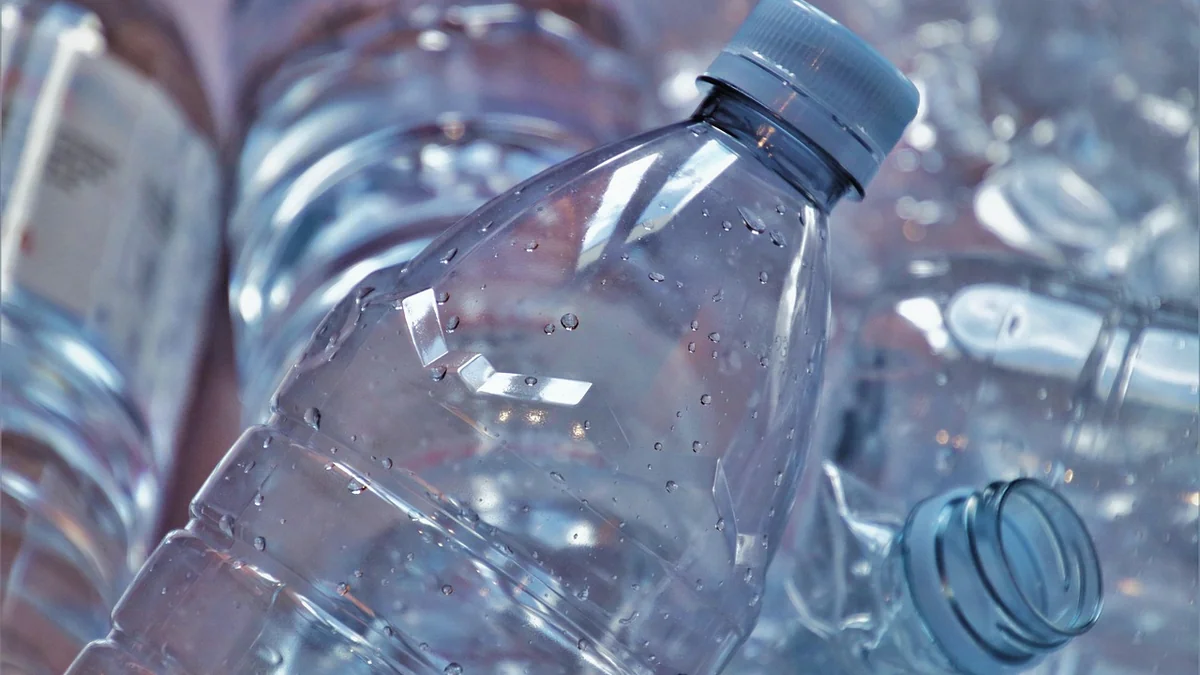
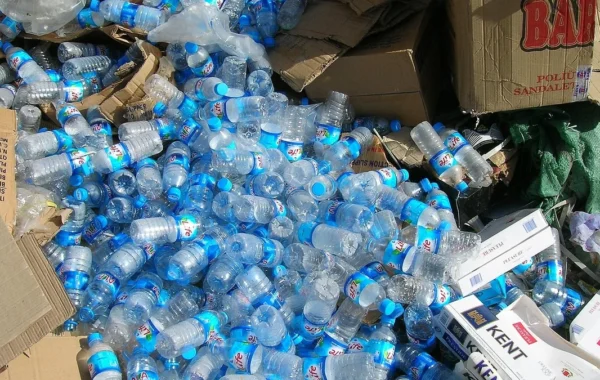
Contamination is the single largest cost driver and quality destroyer in the recycling industry. A load of post-consumer bales arriving at a reprocessor typically contains 5–15% non-target material: wrong polymers, paper, metals, organics, silicone sealants, and increasingly items made of bioplastics that visually mimic conventional PET or PE but melt at different temperatures and cross-contaminate the stream.
Key challenges include:
- Black plastic. Carbon-black pigments absorb NIR light, making automated sorting difficult. Detectable pigments and design-for-recycling protocols are gradually replacing legacy formulations.
- Multilayer films. Crisp packets and stand-up pouches combine PET, aluminium and PE in micrometre-thin layers that mechanical recycling cannot separate.
- Legacy additives. Phthalates, brominated flame retardants and heavy-metal stabilisers in older products complicate food-contact applications of recyclates.
- Economic volatility. When virgin resin prices fall — as they did through 2023–2024 — recyclers lose margin and investment in new capacity slows. Mandatory recycled-content quotas under PPWR are designed precisely to stabilise demand.
- Export restrictions. Since China’s 2018 “National Sword” and the 2021 Basel Convention amendments, Europe must process far more of its own plastic waste domestically, exposing structural undercapacity.
B2B platforms such as odzysk.pro — B2B recyklat have become critical infrastructure in this environment, connecting sorters with converters and reducing the opacity that historically plagued secondary raw-material trade.
Future of plastic recycling
Three forces will shape the next decade of plastic recycling in Europe:
1. Regulation with teeth. The PPWR, in force from 2026, combines mandatory recycled content, design-for-recycling requirements, reuse quotas and restrictions on specific single-use formats. Extended Producer Responsibility fees are being modulated: products easy to recycle pay less, poorly designed ones pay more. Digital Product Passports will make material composition traceable throughout the value chain.
2. Technology convergence. AI-assisted optical sorting, digital watermarks (HolyGrail 2.0), tracer-based sorting and modular chemical recycling units are moving from pilot to commercial scale. Bottle-to-bottle rPET capacity in Europe is projected to double by 2028.
3. Systemic design shift. The industry is gradually moving from “recyclable in theory” to “recycled in practice.” Mono-material packaging, standardised formats, refill and reuse models, and the integration of recycling with the broader circular economy are reshaping product development briefs across FMCG, automotive and construction.
Whether Europe hits its 2030 and 2040 targets depends less on any single technology and more on the coordination of collection, sorting, reprocessing and design. The building blocks are in place; execution is the remaining variable.
FAQ
How many times can plastic be recycled?
Mechanically recycled PET and HDPE can typically go through 7–10 heat cycles before the polymer chain degrades enough to compromise performance. Chemical recycling, by breaking polymers back to monomers, theoretically allows infinite cycles at virgin-equivalent quality.
Why is the global plastic recycling rate so low?
Globally, only about 9% of all plastic ever produced has been recycled. The reasons include fragmented collection infrastructure, cheap virgin resin, the dominance of non-recyclable formats (films, multilayers, small items), and historic reliance on exports to Asia that collapsed after 2018.
Are bioplastics the same as recyclable plastics?
No. Bioplastics are defined by their feedstock (bio-based) or end-of-life (biodegradable or compostable). Some, like bio-PET, are chemically identical to fossil PET and fully recyclable. Others, such as PLA, are compostable only in industrial facilities and act as contaminants in conventional recycling streams.
What does “food-grade recyclate” mean?
Food-grade recyclate is recycled plastic approved under EFSA and EU Regulation 2022/1616 for direct contact with food. In practice, virtually all food-grade recyclate on the European market today is rPET, produced via super-clean mechanical processes or depolymerisation.
How can businesses source recycled plastic reliably?
Reliable sourcing requires clear specification (polymer, grade, colour, MFI, moisture, certifications such as EuCertPlast or RecyClass) and trusted counterparties. B2B marketplaces like Plastic Trader and odzysk.pro — B2B recyklat aggregate suppliers and provide the contractual and quality infrastructure needed for industrial-scale offtake.

[…] Plastic Recycling […]