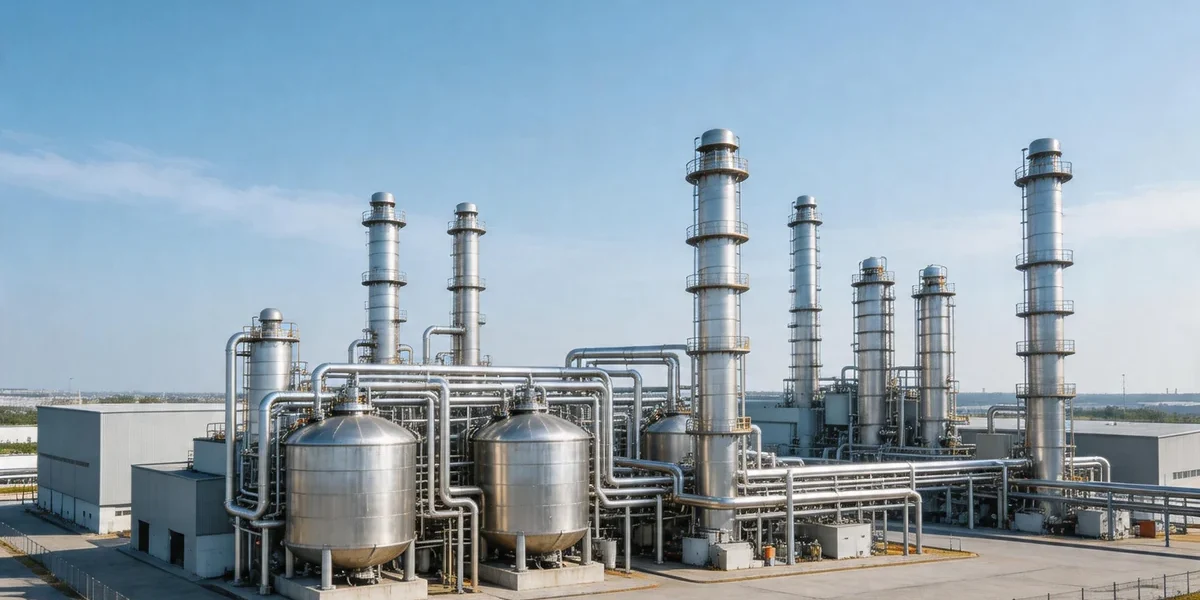
What is chemical recycling?
Chemical recycling — also called advanced or molecular recycling — is a family of technologies that break plastic waste back down to its chemical building blocks: monomers, oligomers, hydrocarbon feedstocks or synthesis gas. Unlike mechanical recycling, which melts and re-pelletizes polymers while keeping their chain structure intact, chemical recycling reverses polymerization or thermally cracks the polymer chains, so the resulting material is chemically indistinguishable from virgin feedstock.
The concept is not new. Depolymerization of nylon dates to the 1940s, and pyrolysis of hydrocarbons is as old as petroleum refining itself. What changed over the past decade is scale, investment and regulatory attention: chemical recycling is now seen by many producers, brand owners and policymakers as a necessary complement to mechanical recycling, particularly for the mixed, contaminated and multilayer plastic streams that today end up incinerated or landfilled.
Why chemical recycling matters
Mechanical recycling — sorting, washing, shredding, extruding — remains the cheapest, lowest-carbon and most widely deployed way to deal with post-consumer plastics. But it has well-known limits.
- Polymer degradation. Every melt cycle shortens polymer chains, reduces molecular weight, and degrades mechanical properties. Most thermoplastics can only be mechanically recycled three to seven times before the resin is unusable for demanding applications.
- Mixed and contaminated waste. Multilayer films (PE/PA/EVOH), laminated cartons, carpets, fiber-reinforced composites and heavily printed or inked packaging cannot be mechanically recycled economically. These streams make up a large share of the roughly 60% of European plastic waste that is not recycled today.
- Food-grade requirements. Regulators in the EU and US apply strict purity requirements to food-contact recycled plastic. For polyolefins (PE, PP) in particular, mechanical recycling struggles to deliver the required decontamination; chemical recycling produces monomers or hydrocarbons that are, by definition, indistinguishable from virgin.
- Colored and black plastics. NIR sorters miss carbon-black-pigmented trays and bottles. Chemical recycling is colour-blind.
For an in-depth technical and economic comparison, see our guide to mechanical vs chemical recycling.
Main chemical recycling technologies
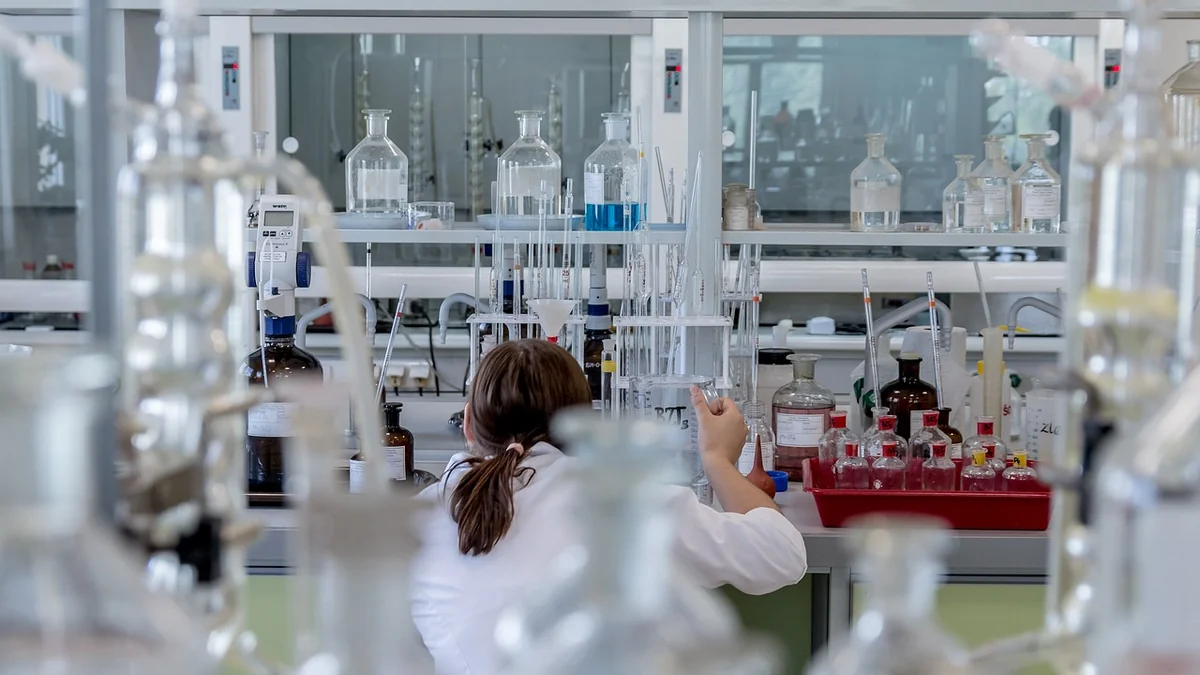
Chemical recycling is an umbrella term covering four broad families of processes. They differ in the chemistry involved, the feedstocks they accept, the products they yield and their technology readiness level (TRL).
| Technology | Typical feedstock | Main products | TRL | Commercial examples |
|---|---|---|---|---|
| Pyrolysis | Mixed polyolefins (PE, PP, PS), tires | Pyrolysis oil, naphtha, wax, gas | 7-8 | Plastic Energy, Quantafuel, BASF ChemCycling, Neste |
| Gasification | Very mixed waste, RDF, biomass+plastic | Syngas (CO + H2) → methanol, fuels, olefins | 6-7 | Enerkem, SABIC/Plastic Energy JV, Fulcrum BioEnergy |
| Depolymerization | PET, PU, PA, PLA, PMMA | Virgin-equivalent monomers | 7-9 (PET) | Eastman, Loop Industries, Ioniqa, Carbios |
| Solvent-based dissolution | PE, PP, PS, PVC from multilayer/composite | Purified polymer (same chain) | 5-7 | APK Newcycling, PureCycle, Polystyvert |
Pyrolysis
Pyrolysis is the thermal cracking of hydrocarbon polymers in the absence of oxygen, typically between 400 and 700 °C. The long polyolefin chains break into shorter hydrocarbons: a liquid fraction (pyrolysis oil or pyoil), a lighter naphtha-like cut, waxes, non-condensable gases that are often used to fuel the reactor, and a small char residue.
The pyrolysis oil is then hydrotreated and sent to a steam cracker as a drop-in replacement for fossil naphtha. This is the critical point: the output of pyrolysis is not a finished polymer — it is a petrochemical feedstock. The new polyethylene or polypropylene that eventually reaches a brand owner comes out of a conventional steam cracker that processed partly recycled naphtha. That is why the mass balance approach (see below) is essential for pyrolysis economics.
Commercial plants are operating at 15 000-50 000 t/a today. Plastic Energy runs two plants in Spain and is building larger units in France and the Netherlands with partners including TotalEnergies and ExxonMobil. Neste buys liquefied waste plastic and co-processes it in its refineries. BASF’s ChemCycling programme is built on pyrolysis oil from third-party suppliers. TRL is usually given as 7-8, with several first-of-a-kind commercial plants running, but industrial-scale operation (>100 kt/a) is still being demonstrated.
Gasification
Gasification takes the process further. At 800-1500 °C with a controlled amount of oxygen or steam, carbonaceous feedstock — including very mixed, wet, dirty waste that pyrolysis cannot accept — is converted into syngas: a mixture of carbon monoxide and hydrogen. Syngas is then either burned for power, or, in the advanced recycling context, catalytically converted to methanol, dimethyl ether, Fischer-Tropsch liquids, or via the methanol-to-olefins route, back into ethylene and propylene.
Enerkem’s flagship plant in Edmonton, Canada, converts municipal solid waste into methanol and ethanol. The SABIC/Plastic Energy joint venture in Geleen and a growing number of projects in Europe and Asia target plastic-rich waste streams. TRL is 6-7 for plastic-dedicated gasification with chemical downstream, higher for waste-to-energy gasification. Gasification’s strength is feedstock flexibility; its weakness is a less favourable energy and CO2 balance than pyrolysis or depolymerization.
Depolymerization
Depolymerization reverses the polymerization reaction and recovers the original monomers. It is chemistry-specific: each polymer family requires its own process.
- Glycolysis of PET. PET reacts with excess ethylene glycol at 180-240 °C in the presence of a catalyst (typically zinc acetate) to yield bis(hydroxyethyl) terephthalate (BHET), which can be repolymerized into virgin-quality PET. This is the dominant approach at industrial scale today. Ioniqa in the Netherlands has licensed its magnetic-catalyst glycolysis to Indorama; Eastman’s Kingsport, Tennessee facility is ramping up to over 100 kt/a of methanolysis-based PET recycling.
- Methanolysis of PET. Reaction with methanol produces dimethyl terephthalate (DMT) and ethylene glycol. Eastman and Loop Industries pursue this route.
- Hydrolysis. Water-based depolymerization (alkaline, neutral or enzymatic) yields terephthalic acid and ethylene glycol. Carbios’s enzymatic process is approaching commercial demonstration in Longlaval, France.
- Other polymers. PU can be glycolysed; PMMA depolymerizes almost quantitatively back to MMA monomer (Agilyx, Trinseo); PS depolymerizes to styrene; PA6 is well-suited to depolymerization back to caprolactam.
For PET, depolymerization is the highest-TRL chemical recycling route — arguably commercial (TRL 9). For other polymers it remains at demonstration scale.
Solvent-based dissolution
Strictly speaking, solvent-based dissolution (“physical recycling” in some taxonomies) does not break chemical bonds. A targeted solvent selectively dissolves one polymer out of a multimaterial waste stream, filtration and precipitation remove additives, pigments and contaminants, and the recovered polymer has the same molecular weight and structure as the input.
Leading processes include APK Newcycling’s Newcycling® (selective dissolution of PE from multilayer films), PureCycle’s NMP-based PP purification (licensed from P&G), and Polystyvert’s dissolution of PS. Solvent-based dissolution is attractive because it preserves polymer value and avoids the energy penalty of cracking and repolymerization, but it is restricted to streams where a single polymer can be targeted, and solvent recovery dominates the economics.
Mass balance approach and ISCC+ certification
Because pyrolysis oil and recycled monomers are fed into existing petrochemical infrastructure, the recycled molecules get physically mixed with fossil ones. You cannot separate a single recycled ethylene molecule at the output of a steam cracker. The industry therefore uses a mass balance accounting method: the producer tracks the recycled feedstock going in and allocates a corresponding share of the output as “recycled content.”
ISCC PLUS is the dominant certification scheme in Europe for this allocation. It audits the chain of custody, conversion factors and claims. Critics — including Zero Waste Europe, ECOS and parts of the European Parliament — argue that free attribution (allocating all recycled feed to a small premium product) can overstate actual recycled content and allow greenwashing. The European Commission is working on a delegated act under PPWR that will set rules for how chemical recycling contributes to recycled-content targets; the outcome is still being negotiated in 2026.
Cost and energy footprint
Economics remain the single biggest barrier to chemical recycling scale-up. Public and industry estimates converge around:
- Mechanical recycling: €200-500/t gate fee plus sale of rPET/rPE at €800-1600/t.
- Pyrolysis: €800-1500/t of plastic feedstock all-in, with pyrolysis oil sold at a premium over fossil naphtha of €300-600/t.
- Depolymerization (PET): €900-2000/t depending on technology and scale; rPET from depolymerization typically commands a €300-800/t premium over mechanical rPET for food-contact applications.
- Gasification-to-methanol: €1000-1800/t, very sensitive to feedstock cost and methanol market price.
On a life-cycle carbon basis, mechanical recycling is almost always preferable where it is technically possible: typical LCA studies find 1.0-1.5 t CO2eq saved per tonne of plastic vs. virgin production. Pyrolysis shows 0.5-1.0 t CO2eq savings depending on energy mix and system boundaries; gasification is often close to break-even with incineration plus virgin production unless run on renewable energy. Depolymerization of PET is close to mechanical recycling on carbon, especially when waste heat is integrated. These numbers explain why serious policy frameworks treat chemical recycling as a complement — not a replacement — for mechanical plastic recycling.
EU policy — PPWR and the chemical recycling debate
The Packaging and Packaging Waste Regulation (PPWR), adopted in 2024 and entering into force progressively from 2025-2030, sets binding recycled-content targets for plastic packaging: 10-35% depending on application by 2030, 25-65% by 2040. Whether, and how, chemical recycling counts toward these targets is the most consequential open question for the sector.
Industry associations (Plastics Europe, Cefic) lobby for mass-balance-based counting with the “free attribution” method, arguing it mirrors how renewable electricity certificates work and is needed to attract investment. NGOs (Zero Waste Europe, ECOS, Rethink Plastic, Greenpeace) push for the “fuel-exempt, polymer-only, proportional” method, which would exclude the fuel fraction of pyrolysis oil from claims and prevent over-allocation. The Commission’s delegated act, expected in 2026-2027, will decide.
Separately, the EU Emissions Trading System revision and the Carbon Border Adjustment Mechanism will increasingly penalize fossil-based plastics, which improves the relative economics of all recycling — mechanical and chemical alike. See our circular economy pillar page for how these instruments fit together.
Major investments and capacities
Announced European chemical recycling capacity additions exceed €8 billion by 2030, spread across roughly 80 projects. Headline examples:
- Plastic Energy × TotalEnergies × ExxonMobil — multiple plants in France, Netherlands, Spain; combined ambition >400 kt/a by 2030.
- SABIC × Plastic Energy — Geleen, Netherlands, scaling pyrolysis-to-polymer loop.
- Neste — refinery co-processing of waste plastic; target 1 Mt/a waste plastic feed by 2030.
- BASF ChemCycling — Ludwigwigshafen integration with multiple pyrolysis-oil suppliers.
- Eastman — €850 m methanolysis plant announced in Normandy, France (status revisited in 2024-2026 reviews).
- LyondellBasell × Mura Technology — HydroPRS hydrothermal process, 55 kt/a plant at Wesseling, Germany.
- Ioniqa × Indorama — licensed glycolysis deployments.
- Carbios — 50 kt/a enzymatic PET depolymerization plant, Longlaval.
On the other side, critics including Greenpeace, the Global Alliance for Incinerator Alternatives (GAIA), Zero Waste Europe and several academic groups document a significant gap between announced and actually running capacity, project cancellations (notably several U.S. pyrolysis units in 2022-2024), and lifecycle assessments that question some industry claims. Realistic European chemical recycling throughput in 2026 is below 0.5 Mt/a against an installed mechanical recycling capacity of roughly 10 Mt/a.
Challenges: scale, feedstock, claims and regulation
- Scale. Moving from 15-50 kt/a demonstration plants to 100-300 kt/a commercial plants involves reactor engineering challenges, catalyst management and feedstock logistics that are not yet solved across all technologies.
- Feedstock flexibility and pre-treatment. Pyrolysis is sensitive to PVC (chlorine), PET (oxygen) and nitrogen-containing polymers. High-quality pre-sorting and decontamination are essential, which competes for the same feedstock that mechanical recyclers need.
- Net-zero and “recycled content” claims. Mass balance without strict rules can mislead consumers. Harmonized certification and transparent reporting are prerequisites for public acceptance.
- Regulatory uncertainty. PPWR secondary legislation, U.S. state-by-state rules, waste shipment regulation revisions and ETS evolution all influence investment decisions.
- Public perception. The “recycling vs incineration” debate is increasingly political. Clear communication, independent LCAs and focus on difficult-to-recycle streams are needed to maintain legitimacy.
The role of chemical recycling in the circular economy
A credible circular plastics system is a hierarchy. First, reduction and reuse. Then mechanical recycling, as high up the value chain as possible. Then chemical recycling — depolymerization where the polymer allows it, dissolution for multilayer streams, pyrolysis and gasification for the most difficult mixed waste. Energy recovery and, last of all, landfill.
Chemical recycling is neither the silver bullet its most enthusiastic proponents claim nor the greenwash its harshest critics describe. It is a toolbox of technologies with genuine technical merit for specific waste streams, backed by real investment and real plants, but also shaped by accounting rules and policy choices that are still being written. For plastics buyers, traders and recyclers — partners such as Plastic Trader and odzysk.pro — understanding the technical, economic and regulatory shape of chemical recycling is now a core competence.
FAQ
Is chemical recycling really recycling?
Under the EU Waste Framework Directive, an operation is recycling if waste is reprocessed into products, materials or substances for the original or other purposes, excluding fuel use and backfilling. Depolymerization and dissolution clearly qualify. Pyrolysis and gasification qualify only for the non-fuel output fraction — which is why the fuel-exempt mass balance debate matters.
Can chemical recycling replace mechanical recycling?
No, and most industry players say it should not. Mechanical recycling has a lower cost and lower carbon footprint for the streams it can handle. Chemical recycling is complementary, targeting mixed, contaminated and food-grade applications where mechanical recycling is limited.
Is pyrolysis oil “recycled”?
It is a recycled feedstock. Whether a polymer made from pyrolysis oil can be labelled “recycled content” depends on certification (ISCC+), allocation method and the final regulatory framework under PPWR.
Is chemical recycling energy-intensive?
Yes. Pyrolysis typically consumes 3-6 GJ per tonne of plastic feedstock; gasification more. Depolymerization of PET is more efficient. The carbon balance depends heavily on the electricity mix and whether the process is heat-integrated.
When will chemical recycling be at scale in Europe?
Current trajectory suggests 2-3 Mt/a of operational capacity by 2030 in a realistic scenario, versus 10+ Mt/a announced. Meaningful contribution to PPWR recycled-content targets is expected from 2028 onward for PET depolymerization and from 2030 onward for polyolefin pyrolysis.


Leave a Reply