How Much Plastic Is in the Ocean?
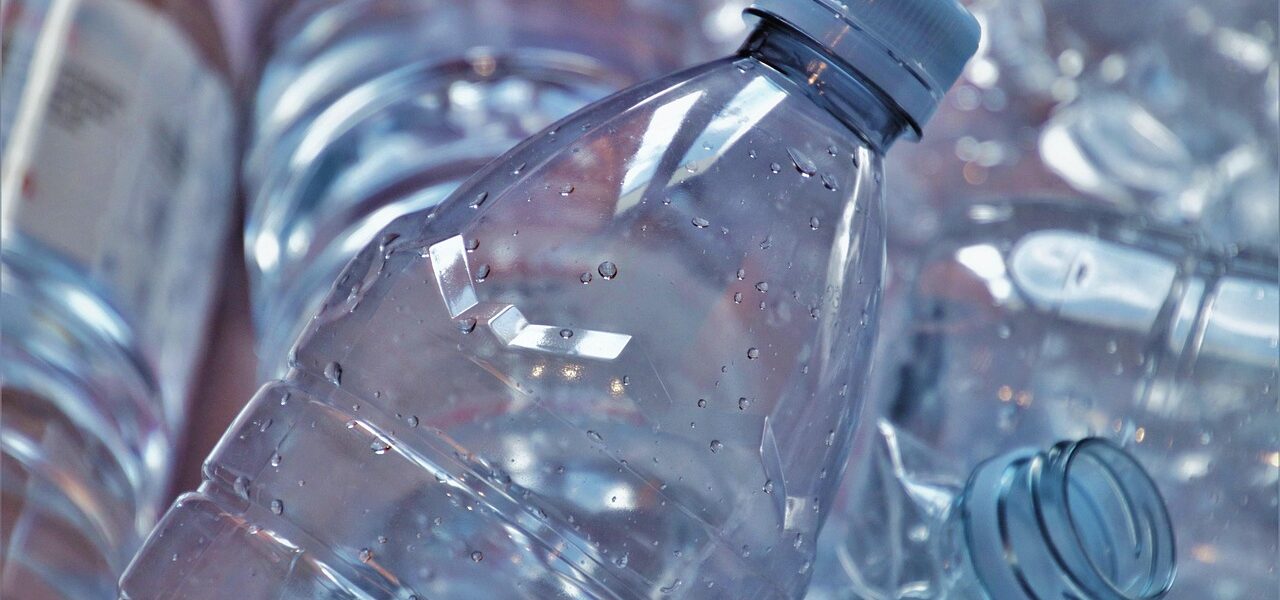
The scale of ocean plastic pollution has reached a level that scientists describe as a planetary emergency. According to estimates published in the journal Science, approximately 8 million metric tons of plastic enter the world’s oceans every year — the equivalent of dumping a garbage truck full of plastic into the sea every single minute. Since large-scale plastic production began in the 1950s, over 8.3 billion metric tons of plastic have been manufactured globally, and roughly 60% of that has ended up in landfills or the natural environment.
Today, researchers estimate there are between 150 and 200 million metric tons of plastic already circulating in the world’s oceans, with more arriving every hour. Of this total, microplastics — particles smaller than 5 millimetres — make up the vast majority by number. A 2015 study estimated 5.25 trillion plastic particles floating on the ocean surface alone, weighing approximately 269,000 tonnes. These numbers continue to rise as plastic production accelerates faster than cleanup efforts can respond.
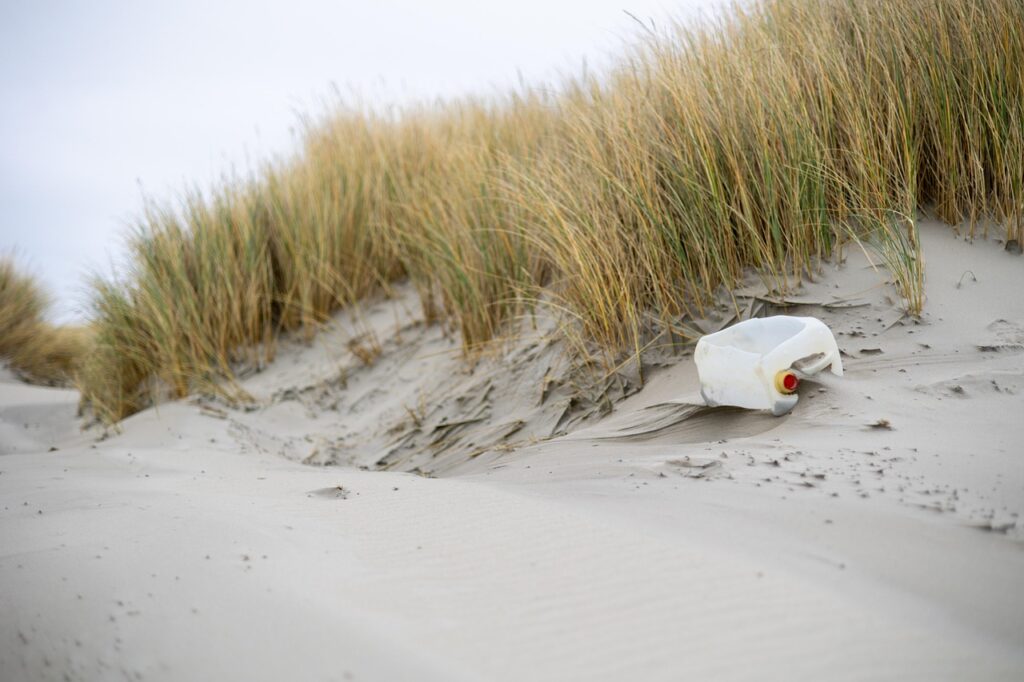
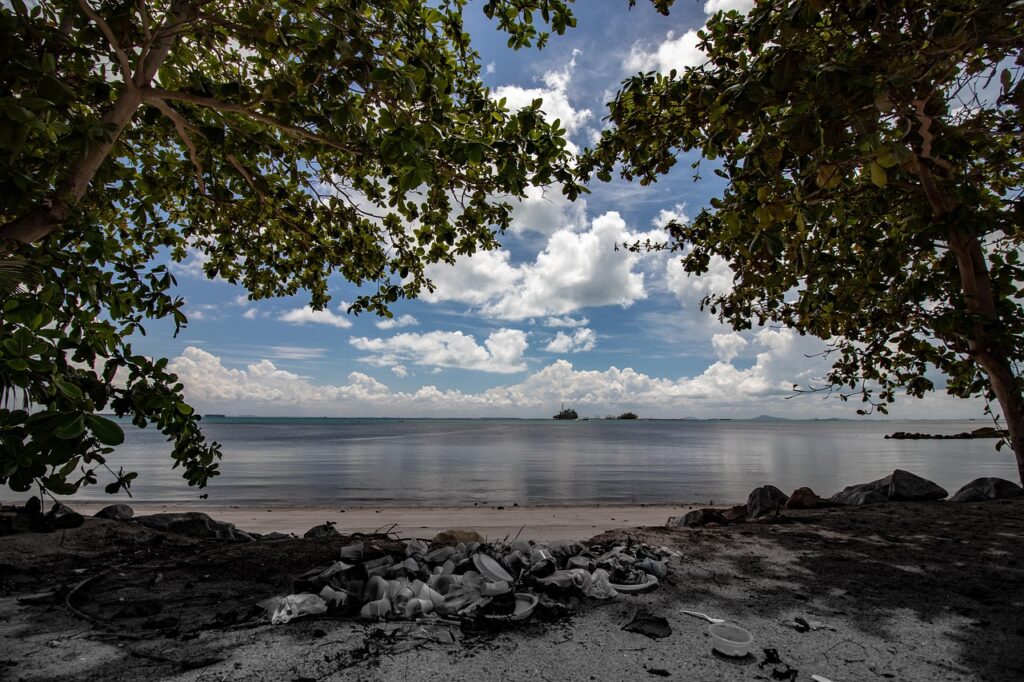
The problem is not evenly distributed. Coastal nations in South and Southeast Asia, alongside parts of Africa, contribute disproportionately to ocean plastic inputs due to inadequate waste management infrastructure. However, consumption patterns in wealthier nations fuel the global production of single-use plastics that ultimately find their way into marine environments worldwide. No ocean basin — from the Arctic to the deep sea trenches of the Pacific — is free from contamination.
The Great Pacific Garbage Patch and Ocean Gyres
Perhaps the most iconic symbol of plastic in the sea is the Great Pacific Garbage Patch — a vast accumulation zone located in the North Pacific Ocean between Hawaii and California. Contrary to popular imagery, it is not a solid island of rubbish but rather a diffuse soup of plastic fragments, with higher concentrations in the centre and tapering densities toward the edges. Recent surveys conducted by The Ocean Cleanup project estimated its total mass at approximately 80,000 metric tons, covering an area of roughly 1.6 million square kilometres — larger than France.
The patch exists because of ocean gyres: large systems of rotating ocean currents driven by wind patterns and the Earth’s rotation. There are five major subtropical gyres, and each one functions as a convergence zone where floating debris spirals inward and accumulates. Beyond the North Pacific, similar accumulation zones exist in the South Pacific, North Atlantic, South Atlantic, and Indian Ocean. The Great Pacific Garbage Patch receives the most attention, but all five gyres harbour significant concentrations of plastic debris.
Within these gyres, ultraviolet radiation from the sun and mechanical wave action break larger plastic items down into progressively smaller fragments — from macroplastics and mesoplastics into the microplastics that now pervade virtually every marine habitat on Earth. This fragmentation process does not destroy the plastic; it merely multiplies the number of particles while reducing their size, making removal exponentially more difficult.
How Microplastics Enter the Ocean
Microplastics reach marine environments through multiple pathways, both direct and indirect. Primary microplastics are manufactured at a small size and include microbeads used in cosmetics and personal care products, plastic pellets (nurdles) that serve as the raw material for plastic manufacturing, and synthetic textile fibres released during washing. A single wash cycle of a polyester garment can release hundreds of thousands of fibres, which pass through wastewater treatment systems and enter waterways.
Secondary microplastics form when larger plastic items degrade in the environment. Abandoned fishing gear, plastic packaging, agricultural film, and single-use items like bottles and bags all fragment over time when exposed to sunlight, heat, and physical abrasion. Tyre wear particles are now recognised as one of the largest sources of microplastic contamination in urban runoff: every time a vehicle brakes or turns, tiny rubber and polymer particles are shed from tyres and washed into stormwater drains that lead to rivers and the sea.
Atmospheric deposition represents an increasingly recognised but often overlooked pathway. Studies have detected microplastic particles in rainfall and even in remote mountain environments far from any coastline, demonstrating that these particles can travel thousands of kilometres through the air before settling on the ocean surface. Rivers act as the primary highway for terrestrial plastic waste entering the sea — research suggests that just ten rivers, eight of them in Asia, carry the majority of river-borne plastic into the oceans.
Effects on Marine Life and Ecosystems
The consequences of microplastics on marine life operate across every level of the food web. At the base, phytoplankton — the microscopic algae responsible for producing roughly half of the Earth’s oxygen — can ingest nanoplastics that interfere with photosynthesis and reproduction. Zooplankton, which feed on phytoplankton and form the foundation of marine food chains, mistake plastic particles for food, leading to false satiation, starvation, and reduced reproductive success.
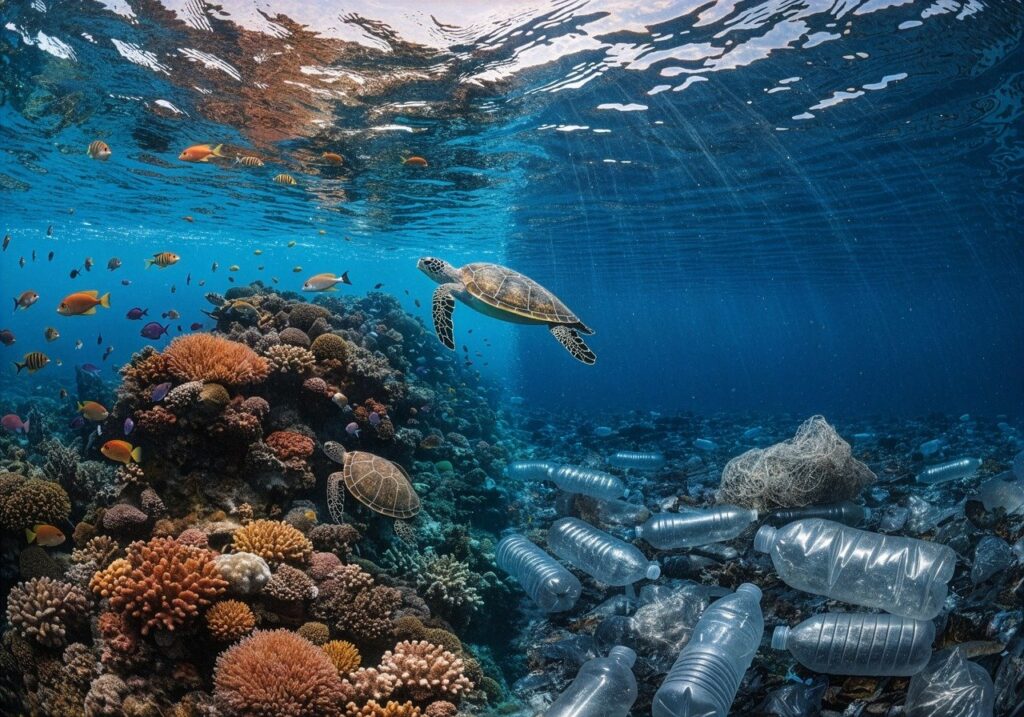
For larger animals, the consequences are both physical and chemical. Sea turtles, seabirds, and marine mammals frequently ingest plastic debris either directly or through prey. Albatrosses feed plastic fragments to their chicks, which die from blocked digestive tracts. Whales have been found washed ashore with dozens of kilograms of plastic in their stomachs. Fish species across hundreds of families have been documented with microplastics in their gastrointestinal tracts — studies suggest that over 800 marine species have been affected by plastic pollution through ingestion, entanglement, or habitat disruption.
Beyond physical harm, plastics act as vectors for toxic chemicals. Persistent organic pollutants (POPs) such as PCBs and DDT adsorb onto plastic surfaces at concentrations up to one million times higher than in surrounding seawater. When marine animals ingest these particles, they absorb concentrated chemical loads that disrupt endocrine systems, impair immune function, and reduce reproductive success. Coral reefs — already under severe stress from ocean warming and acidification — are further threatened: microplastics increase the likelihood of disease in coral tissue and smother the larvae that would otherwise regenerate damaged reefs.
Microplastics and the Human Food Chain
The contamination of marine ecosystems has direct implications for human health. Seafood consumers are now regularly ingesting microplastics. Shellfish such as mussels, oysters, and clams are filter feeders that concentrate plastic particles from the water column — studies have found that a regular shellfish consumer can ingest over 11,000 microplastic particles per year through this source alone. Fish flesh, previously thought to be relatively protected because fish excrete gut contents before consumption, has also been found to contain microplastic particles in muscle tissue.
The reach of ocean microplastics effects extends far beyond seafood. Microplastics have now been detected in drinking water — both tap and bottled — as well as in sea salt, honey, beer, and a wide range of processed foods. Perhaps most strikingly, microplastics have been found in human blood, lung tissue, placental tissue, and breast milk, indicating that systemic human exposure is already a reality. The long-term health consequences of this exposure remain an active and urgent area of research, with preliminary evidence suggesting links to inflammation, oxidative stress, and disruption of the gut microbiome.
What Is Being Done?
Responses to the microplastics crisis are emerging at multiple scales. At the international level, negotiations toward a legally binding global plastics treaty — facilitated by the United Nations Environment Programme — represent the most ambitious attempt yet to establish enforceable standards for plastic production, design, and waste management worldwide. The European Union has moved ahead of many jurisdictions with its Single-Use Plastics Directive, which bans a range of common single-use items including cotton buds, cutlery, straws, and plates made from plastic.
Technological initiatives are attempting to address existing ocean pollution. The Ocean Cleanup organisation has deployed large floating barriers in the Great Pacific Garbage Patch and interception systems in river mouths to capture plastic before it reaches the sea. While these efforts capture measurable quantities of debris, scientists caution that cleanup alone cannot solve the problem without dramatic reductions in plastic entering the environment at source.
Extended Producer Responsibility (EPR) schemes are being rolled out across Europe and increasingly elsewhere, requiring manufacturers to fund the end-of-life management of the packaging they produce. Deposit return schemes for bottles and cans have demonstrated capture rates above 90% in countries such as Germany, Norway, and Estonia. Innovation in materials science is producing genuinely biodegradable alternatives to conventional plastics, though the distinction between truly compostable and merely oxo-degradable materials — which fragment into microplastics rather than breaking down biologically — remains critically important for regulation and consumer understanding.
FAQ
What exactly are microplastics and how small are they?
Microplastics are plastic particles smaller than 5 millimetres in their longest dimension. They can be as large as a grain of rice or as small as a few nanometres — nanoplastics are a subset of microplastics invisible to the naked eye. They include fibres, fragments, films, pellets, and beads, originating from both the deliberate manufacture of small plastic items and the fragmentation of larger plastic products over time.
Can we realistically clean up all the microplastics already in the ocean?
Complete removal of microplastics already present in the ocean is not considered technically feasible with current or foreseeable technology. The sheer volume of particles, their widespread distribution across all ocean depths, and the fact that nanoplastics have entered the tissues of marine organisms make full remediation impossible. The realistic goal is to halt new inputs, allow natural concentrations to decline over time, and focus cleanup efforts on coastal areas and river systems where intervention has the greatest impact.
How can individuals reduce their contribution to ocean microplastic pollution?
Individual actions that meaningfully reduce microplastic inputs include: washing synthetic clothing less frequently and at lower temperatures, using a microfibre-catching laundry bag or filter; avoiding single-use plastics and choosing products packaged in glass, metal, or cardboard; choosing personal care products that are certified free from microbeads; properly disposing of all plastic waste to prevent it entering waterways; and supporting policy measures and organisations working on systemic reductions in plastic production. While individual action matters, structural change at the level of production and regulation is essential to address the problem at scale.


Leave a Reply