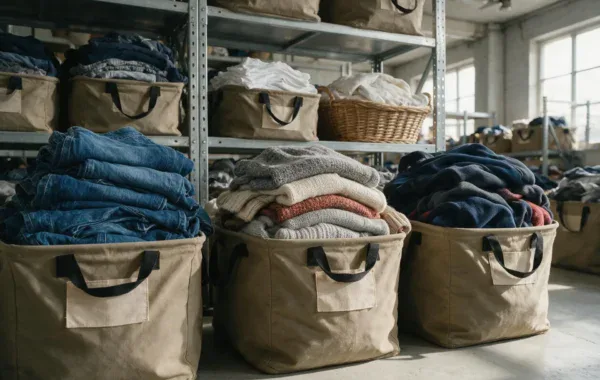
Textile EPR under the revised Waste Framework Directive
Schemes due by 17 April 2028, with waste surveys already running since January 2026. Why the measurement obligation is smarter sequencing than it appears.
Category
Circular economy principles, policies and case studies
Schemes due by 17 April 2028, with waste surveys already running since January 2026. Why the measurement obligation is smarter sequencing than it appears.
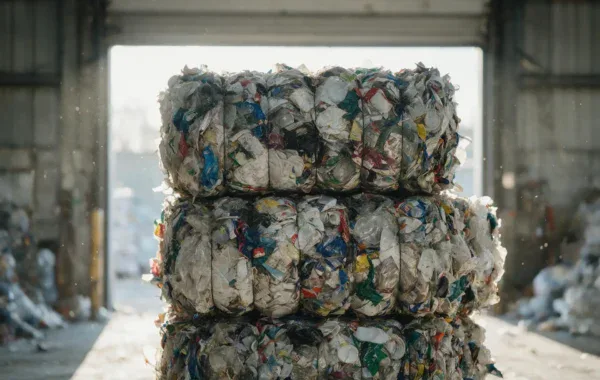
Harmonised criteria replace twenty-seven national answers to one question. They cover mechanical and physical recycling of thermoplastics, and leave chemical recycling outside.
15% after six years, 25% after ten, with at least 20% recovered from end-of-life vehicles. Why the closed-loop clause is the substantive part of the regulation.
Circular production growth fell from 13.6% to 1.2% a year. 8.7 Mt of output, 19% of demand imported, 12.4% of collected waste recycled outside Europe.
Design for Recycling: How Product Design Shapes Recyclability Approximately 91% of all plastic ever produced has never been recycled. While inadequate collection infrastructure and low…
Waste-to-Energy: Role, Limits and Place in the Circular Economy Waste-to-Energy (WtE) refers to the process of generating electricity, heat or both from the combustion or…
What Is Extended Producer Responsibility (EPR)? Extended producer responsibility (EPR) is an environmental policy approach that makes manufacturers, importers, and brand owners financially and operationally…
How Are Recycling Rates Measured in Europe? Understanding recycling rates in Europe starts with knowing how they are calculated. Eurostat, the EU’s statistical office, measures…
What Is the Circular Economy? The circular economy is an economic model designed to eliminate waste and keep materials, products, and resources in use for…