Waste-to-Energy: Role, Limits and Place in the Circular Economy
Waste-to-Energy (WtE) refers to the process of generating electricity, heat or both from the combustion or thermal treatment of municipal solid waste and other waste streams. It is one of the most debated technologies in the circular economy discussion — simultaneously a practical solution for residual waste management and a potential barrier to higher-order waste prevention and recycling.
Global WtE capacity has grown steadily. As of 2023, approximately 900 dedicated WtE facilities operate worldwide, collectively processing around 300 million tonnes of waste annually. Europe is the leading region by installed capacity, with over 500 facilities across EU member states — led by Germany, France, the Netherlands and Sweden. China has rapidly expanded its fleet and now operates more WtE plants by number than any other country, processing over 120 million tonnes per year as of 2022.
WtE sits at a specific and contested position within the circular economy framework. To understand why, it is essential to examine what the technology actually does, how efficient it is, and what the evidence shows about its environmental performance and economic incentive structures. For broader context on how waste management fits within systemic resource strategies, see our complete guide to the circular economy.
How Waste-to-Energy Works
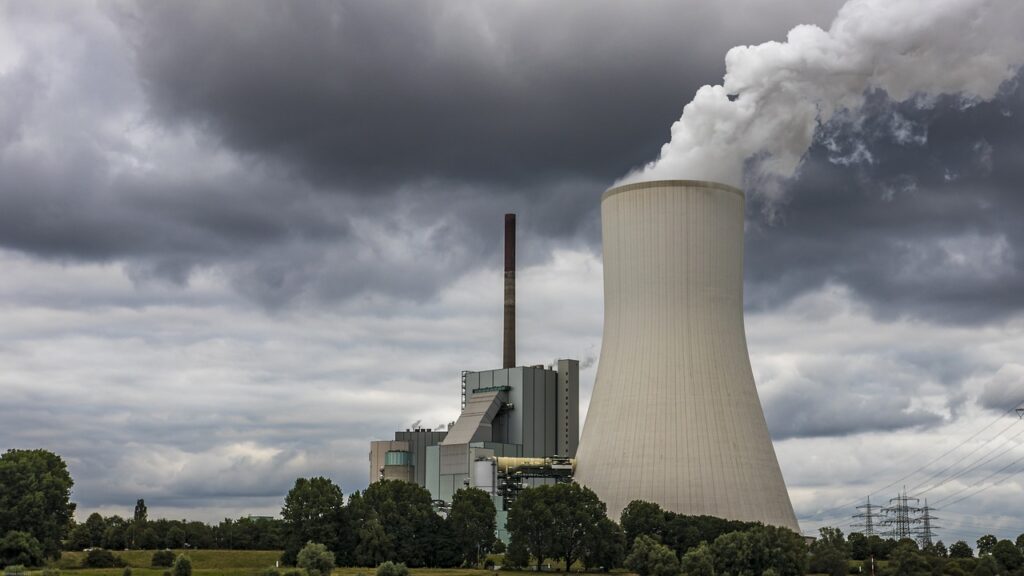
The dominant WtE technology is mass-burn incineration with energy recovery, also known as moving-grate combustion. In a mass-burn facility, unsorted or lightly processed municipal solid waste (MSW) is fed onto a mechanically moving grate inside a combustion chamber. Temperatures reach 850–1,000°C, sufficient to combust organic material and destroy most pathogens. The heat generated raises steam in a boiler; the steam drives a turbine to generate electricity, and in combined heat and power (CHP) configurations, residual heat is distributed via district heating networks.

Refuse-Derived Fuel (RDF) and its higher-quality variant Solid Recovered Fuel (SRF) involve pre-processing waste before thermal treatment. Waste is sorted, shredded and dried to produce a more homogenous, higher-calorific fuel. RDF is burned in dedicated boilers, cement kilns or industrial co-incineration facilities. The advantage over mass-burn is higher calorific value and greater control over fuel quality; the disadvantage is the additional processing cost and energy investment.
Gasification converts waste into a synthetic gas (syngas) — primarily hydrogen, carbon monoxide and methane — through partial oxidation at high temperatures (700–1,200°C) with limited oxygen. The syngas can then be burned to generate electricity or, theoretically, cleaned and used as a chemical feedstock. Pyrolysis operates in the absence of oxygen, thermally decomposing organic material into a liquid oil fraction, a solid char and a gas. Both technologies are often grouped as “advanced thermal treatment” and are discussed below in the context of their current commercial readiness.
Energy Recovery Rates and Efficiency
The energy recovery efficiency of WtE facilities varies significantly depending on technology configuration and whether heat is recovered alongside electricity.
Electricity-only mass-burn facilities typically achieve electrical efficiency of 20–27%. This means that for every unit of energy contained in the waste, only 20–27% is converted to usable electrical output — a modest figure compared to modern gas power stations (50–60% electrical efficiency). The remainder is lost as flue gas heat and other thermal losses.
When facilities are configured for Combined Heat and Power (CHP), the picture changes substantially. By capturing and distributing waste heat — through district heating networks or direct industrial use — total energy efficiency can reach 80–85%. This is why the Scandinavian countries, where district heating is ubiquitous, achieve far higher overall WtE efficiency than most southern European facilities that generate electricity only.
The EU’s R1 formula, set out in the Waste Framework Directive (2008/98/EC) and its subsequent revision, provides a specific efficiency threshold for classifying a WtE facility as a “recovery operation” (R1 status) rather than “disposal.” Facilities that meet the R1 threshold — which requires a minimum energy efficiency calculated from energy inputs, outputs and reference values — are classified as performing recovery (a higher position in the waste hierarchy). Those that fail the threshold are classified as disposal operations, equivalent to landfill from a regulatory standpoint. As of 2023, approximately 75–80% of EU WtE capacity holds R1 status, though this proportion varies significantly by member state and facility vintage.
Environmental Profile
The environmental profile of WtE is complex and has improved substantially over recent decades, though significant concerns remain.
Bottom ash — the non-combustible residue from the grate — typically constitutes 20–30% of incoming waste mass. It contains metals (some of which can be recovered magnetically), glass, ceramics and mineral fractions. Modern bottom ash processing recovers ferrous and non-ferrous metals before the residual mineral fraction is landfilled or used in road construction applications, though regulatory acceptance for the latter varies across member states.

Fly ash and flue gas treatment residues are classified as hazardous waste in most jurisdictions. They contain heavy metal compounds and dioxin precursors concentrated during combustion. Fly ash must be stabilised and landfilled in dedicated hazardous waste cells — a significant ongoing cost for WtE operators.
The history of dioxin emissions from municipal waste incineration is instructive. In the 1980s and early 1990s, poorly controlled incinerators were among the largest anthropogenic sources of dioxins and furans globally. The introduction of the EU Directive on Municipal Waste Incineration (2000/76/EC), later consolidated into the Industrial Emissions Directive (IED, 2010/75/EU), imposed strict emission limit values for dioxins, heavy metals, particulates, NOx and other pollutants. Modern EU-compliant WtE facilities emit a tiny fraction of the dioxins that older plants generated. Continuous emissions monitoring is legally required.
The CO₂ emissions profile of WtE requires careful interpretation. Waste contains both biogenic carbon (from paper, food, wood and other organic materials) and fossil carbon (from plastics, synthetic textiles and rubber). Under the EU Emissions Trading System (ETS), fossil-derived CO₂ from WtE is not currently subject to free allocation and will be phased into the ETS from 2028, adding a carbon cost to fossil-derived waste combustion. Biogenic CO₂ is treated as carbon-neutral under current EU accounting rules, though this classification is contested in scientific literature.
WtE in the Waste Hierarchy
The EU waste hierarchy, established in the Waste Framework Directive and reinforced across subsequent legislation, ranks waste management options in order of environmental preference: prevention > reuse > recycling > recovery > disposal.
WtE, when it meets the R1 efficiency threshold, is classified as recovery — the fourth tier, above disposal (landfill) but below recycling, reuse and prevention. This positioning is not merely semantic: it has direct policy implications for how WtE is permitted, funded and incentivised relative to alternative waste management options.

The tension between WtE and recycling targets is concrete and well-documented. The EU’s recycling target for municipal solid waste is 55% by 2025, rising to 60% by 2030 and 65% by 2035. WtE consumes material that could, in principle, be recycled. Combusting paper, cardboard, plastic and metals rather than recycling them destroys the embedded material value and the energy that went into producing those materials originally — a double loss from a circular economy perspective. Every tonne of plastic burned generates electricity equivalent to roughly 500–700 kWh, while recycling that plastic saves approximately 1,500–2,000 kWh of energy compared to virgin production. The arithmetic favours recycling strongly for materials where recycling technology exists at scale.
The Lock-in Problem
One of the most significant systemic critiques of WtE is the economic lock-in it creates for waste management systems.
WtE facilities are capital-intensive infrastructure investments with operational lifespans of 25–30 years. To secure financing, operators typically enter into long-term waste supply contracts with municipalities — often for 20–30 years — guaranteeing minimum waste volumes (called “put-or-pay” clauses). Under such contracts, municipalities must either deliver the contracted waste tonnage or pay penalty fees for the shortfall. This creates a structural disincentive for the municipality to reduce waste generation or improve recycling rates: better recycling means less waste to deliver, which triggers financial penalties.
Germany and Denmark provide the most frequently cited examples of this dynamic. Both countries built large WtE capacity in the 1990s and 2000s, partly in response to EU landfill restrictions. By the early 2010s, both faced an overcapacity problem: recycling rates had improved substantially (Germany reached over 65% municipal waste recycling by weight by 2015), leaving insufficient residual waste to feed the facilities. Both countries began importing waste from other European nations — notably the UK, Italy and Ireland — to maintain capacity utilisation. This waste import dynamic effectively meant that countries with strong recycling infrastructure were processing other countries’ recyclable materials as fuel, undermining net European recycling outcomes.
The European Environment Agency has flagged overcapacity in WtE infrastructure as a concern in multiple assessments, noting that it can crowd out recycling investment and create policy incoherence in member states simultaneously pursuing higher recycling targets and running near-capacity WtE facilities.
WtE for Non-Recyclable Waste
The arguments above do not imply that WtE has no legitimate role in a well-designed waste management system. For residual waste that genuinely cannot be recycled — after aggressive source separation, collection and sorting — WtE represents a substantially better option than landfill.
Landfill of biodegradable waste generates methane, a greenhouse gas approximately 84 times more potent than CO₂ over a 20-year timescale. Even capturing landfill gas (LFG) for energy generation recovers only 50–80% of generated methane; the remainder escapes to atmosphere. WtE, for all its limitations, eliminates methane generation from biodegradable waste and reduces landfill volume by approximately 90% by weight.
In regions where recycling infrastructure is underdeveloped, WtE at appropriate scale can deliver genuine environmental benefits compared to the alternatives. The key policy challenge is ensuring that WtE is scaled to serve only the genuinely residual waste stream — the fraction that remains after maximised prevention, reuse and recycling — and not sized to consume recyclable materials as a consequence of business model requirements.
Advanced Thermal Technologies
Gasification and pyrolysis have attracted substantial investment and attention as alternatives to mass-burn incineration, promising higher efficiency, greater fuel flexibility and potential for chemical feedstock production.
Gasification converts waste to syngas through partial oxidation. Theoretically, syngas can be cleaned and used to produce hydrogen, synthetic fuels or chemical feedstocks — offering a pathway to material recovery rather than pure energy recovery. Several gasification demonstration plants have operated in Japan and Europe. However, the technology faces persistent challenges with syngas contamination (tar formation), feedstock variability and the high cost of gas cleaning relative to the value of the output.
Pyrolysis of mixed plastic waste has seen renewed commercial interest as a pathway to produce pyrolysis oil, which can be used as a chemical feedstock for virgin-equivalent plastic production — effectively a form of chemical recycling. Companies including Plastic Energy, Pyrum Innovations and Renewlogy have scaled demonstration facilities. The limitations are significant: feedstock must be relatively clean and homogenous plastic (mixed contaminated plastic performs poorly), yields are variable, and the economics depend heavily on oil prices and plastic credit markets. Regulatory classification of pyrolysis oil as a chemical product rather than a waste output is still being resolved in several EU member states.
Neither gasification nor pyrolysis is currently deployed at commercial scale with the consistency and cost profile needed to challenge mass-burn incineration as the dominant technology for residual municipal solid waste. Both may play roles in specific niche applications — particularly pyrolysis for plastic fractions unsuitable for mechanical recycling. For statistics on current global plastic recycling capacity and rates, see our article on global plastic recycling rates and statistics.
Frequently Asked Questions
Is waste-to-energy the same as recycling?
No. Under the EU waste hierarchy, WtE is classified as recovery — specifically energy recovery — which is one step below recycling in the hierarchy. Recycling recovers the material value of waste; WtE destroys the material and recovers only the energy content. Recycling a tonne of aluminium saves approximately 95% of the energy needed to produce aluminium from ore; burning that aluminium in a WtE plant recovers perhaps 25% of its energy content as electricity. The material value — and the emissions avoided by not mining and smelting new aluminium — is lost permanently.
Are modern WtE plants safe from an emissions perspective?
Modern EU-regulated WtE facilities are among the most tightly controlled combustion sources in existence. The Industrial Emissions Directive sets strict limits on dioxins (0.1 ng/Nm³ toxic equivalency), heavy metals, particulates and other pollutants, with continuous monitoring required. Dioxin emissions from modern EU WtE plants are a fraction of what hospitals, diesel engines and domestic wood burning emit on a per-tonne-of-waste basis. The picture is different in countries without equivalent regulatory frameworks.
Why do some countries import waste for WtE facilities?
When a country builds WtE capacity sized for a projected waste volume, and subsequently improves its recycling rates, it may face a gap between contracted capacity and available domestic residual waste. Rather than operate facilities below contracted volumes (incurring financial penalties), operators import waste from neighbouring countries with lower recycling rates or less WtE capacity. This cross-border waste trade is legal within the EU under the Waste Shipment Regulation, but it creates the perverse situation where high-recycling countries process low-recycling countries’ waste, potentially including recyclable fractions that could have been recovered closer to the source.
What happens to the ash from WtE facilities?
WtE combustion produces two ash fractions. Bottom ash (20–30% of input mass by weight) is the residue from the grate; it is processed to recover ferrous and non-ferrous metals, and the mineral residue is either landfilled or used as a construction aggregate where permitted. Fly ash and air pollution control residues (typically 3–5% of input mass) are classified as hazardous waste. They are chemically stabilised and disposed of in dedicated hazardous waste landfill cells. Neither fraction is recyclable in the conventional sense; they represent a net material loss from the resource cycle.
Conclusion
Waste-to-Energy occupies a specific and legitimate — if limited — role in the circular economy. For genuinely non-recyclable residual waste, it represents a substantially better outcome than landfill: no methane generation, significant volume reduction and energy recovery that displaces fossil fuel generation. Modern EU-regulated facilities meet stringent emissions standards that bear little resemblance to the poorly controlled incinerators of the 1980s.
The problems with WtE are primarily structural and economic rather than technical. Long-term supply contracts create lock-in incentives that work against waste reduction and recycling improvement. Overcapacity — as evidenced in Germany and Denmark — can distort national waste markets and undermine recycling investment. Combusting recyclable materials in the name of energy recovery destroys material value that would be far better preserved through higher-order circular economy strategies.
The appropriate policy framework is one that treats WtE as a backstop technology for a shrinking residual waste stream — not as a cornerstone infrastructure investment sized for today’s waste volumes. As prevention, reuse and recycling improve, demand for WtE capacity should decline. Investment decisions made today in WtE infrastructure will lock in waste management pathways for 25–30 years; they should be made with that trajectory explicitly in view.

Leave a Reply