How Are Recycling Rates Measured in Europe?
Understanding recycling rates in Europe starts with knowing how they are calculated. Eurostat, the EU’s statistical office, measures recycling rates as the percentage of municipal solid waste that is recycled or composted out of total waste generated. This includes household waste, similar commercial waste, and waste from public spaces.
However, comparisons between countries can be misleading due to differences in measurement methodology. Some countries count waste at the point of collection, while others measure it after sorting and processing. The EU has worked to harmonise these methods through the Waste Framework Directive, but national reporting practices still vary. For example, some countries include composting and anaerobic digestion in their figures, while others report only material recycling. This means a country reporting a higher rate may simply be using a broader definition rather than genuinely recycling more.
Municipal solid waste (MSW) is the primary metric used in EU recycling statistics, but other streams — such as construction and demolition waste, packaging, and electronic waste — are tracked separately. The headline recycling rate most commonly cited in media and policy discussions refers to MSW only, which covers roughly 10% of all waste generated in the EU by weight.
EU Recycling Targets for 2025 and 2030
The European Union has established binding recycling targets under the revised Waste Framework Directive. By 2025, member states must recycle at least 55% of municipal waste. This rises to 60% by 2030 and 65% by 2035. These are not aspirational goals — failure to meet them can result in infringement proceedings and financial penalties.
For packaging waste, the targets are even more ambitious. The EU Packaging and Packaging Waste Regulation sets material-specific targets: 70% of all packaging must be recycled by 2030, with sub-targets for plastic (55%), wood (30%), ferrous metals (80%), aluminium (60%), glass (75%), and paper and cardboard (85%).

As of 2025, the EU average municipal waste recycling rate stands at approximately 48%, meaning the bloc as a whole has not yet met its own 2025 target. Progress has been uneven, with northern and western European countries comfortably ahead of requirements and several eastern and southern member states still well below the threshold. The European Commission has issued formal warnings to multiple countries at risk of missing their obligations.
Top Recycling Countries in Europe: Germany, Austria, Netherlands, and Switzerland
Which country recycles the most in Europe? Germany consistently ranks among the leaders in the Europe recycling comparison, with a municipal waste recycling rate of approximately 67% as of the latest available data. Germany’s success is rooted in its decades-long system of separate collection, the Green Dot (Grüner Punkt) packaging scheme, and strict producer responsibility legislation. The country also operates one of the world’s most extensive deposit-return systems for beverage containers, with return rates above 98% for eligible bottles.
Austria follows closely, with a recycling rate around 58–60%. Austrian municipalities have long invested in infrastructure for separate waste collection, and the country has high public participation rates in biowaste and packaging separation programmes.
The Netherlands reports recycling rates above 55%, supported by a sophisticated sorting infrastructure and a strong regulatory framework. Dutch households have access to separate collection for plastics, paper, glass, organic waste, and textiles. The Netherlands has also been a leader in extended producer responsibility schemes that fund collection and recycling systems.
Switzerland, while not an EU member, is often cited in European comparisons. Swiss recycling rates for specific material streams are exceptionally high — glass recycling exceeds 95%, aluminium cans achieve over 90%, and PET bottle collection rates are among the highest in the world. Switzerland’s success is partly attributed to weight-based waste charges that create a direct financial incentive for residents to separate recyclables.
Other strong performers include Belgium, Denmark, and Slovenia, all of which exceed the EU’s 2025 target of 55% and have established robust collection infrastructure and public awareness programmes.
Countries Below EU Average
Despite progress across the continent, a significant number of EU member states still fall below the 48% EU average recycling rate, and several are far short of the 55% target required by 2025. Romania, Malta, Cyprus, and Bulgaria typically report recycling rates between 10% and 30% — a stark contrast to the top performers.
Several factors explain this gap. Countries that relied heavily on landfill for decades have had to invest in entirely new infrastructure from scratch. Funding constraints, lower levels of environmental awareness among the general public, and fragmented municipal waste management systems have all slowed progress. In some cases, governance challenges and corruption in waste contracting have also been cited as barriers.

The United Kingdom, following its departure from the EU, reported a recycling rate of approximately 44% for household waste — below the former EU target it was once bound by. England in particular has struggled with inconsistent collection systems across local authorities, and a long-delayed reform of the packaging producer responsibility regime has only recently begun to take effect.
Even within better-performing countries, there are significant regional disparities. In Italy, the north typically achieves recycling rates above 65%, while some southern regions barely reach 30%. These internal gaps reflect differences in infrastructure investment, local government capacity, and cultural attitudes toward waste separation.
Plastic Recycling Rates: A Special Challenge
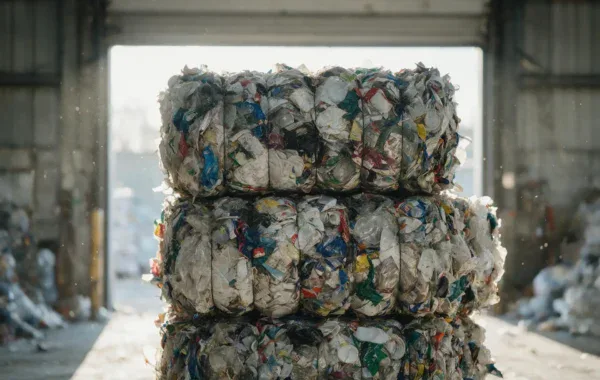
Plastic deserves particular attention in any discussion of plastic recycling rates in Europe. Despite plastics being one of the most visible waste streams, recycling rates remain disappointingly low compared to materials like glass, paper, or metals. The EU-wide plastic recycling rate for packaging was around 42–44% in recent years, with wide variation between countries.

The reasons for lower plastic recycling rates are both technical and economic. Plastics come in many different polymer types, not all of which are technically or economically viable to recycle. Contamination — when plastic waste is mixed with food residue or other materials — reduces the quality of recyclate and increases processing costs. Furthermore, the market for recycled plastics has historically been undermined by cheap virgin plastic produced from fossil fuels.
The EU’s Single-Use Plastics Directive and the targets within the Packaging and Packaging Waste Regulation are pushing countries to improve. Mandatory minimum recycled content requirements for plastic bottles — 25% recycled content by 2025 and 30% by 2030 — are creating demand for recycled material, which in turn makes collection and processing more economically attractive. For more on this topic, see our guide to plastic recycling in Europe.
Advanced sorting technologies, including near-infrared (NIR) spectroscopy and AI-driven robotic sorters, are helping to improve the quality and volume of plastics recovered for recycling. However, scaling these solutions across all EU member states requires significant investment.
Why Do Recycling Rates Vary So Much?
The wide variation in EU recycling statistics across countries reflects a combination of structural, cultural, economic, and political factors. Infrastructure is perhaps the most important — countries that invested early in separate collection systems and processing facilities now benefit from decades of refinement and public habit formation. Building equivalent systems in countries that relied on landfill takes both time and capital.
Economic development plays a role too. Wealthier countries can invest more in waste management infrastructure, and their populations tend to generate more recyclable materials (more packaging, electronics, and consumer goods). However, this relationship is not straightforward — some high-income countries have poor recycling rates, while some middle-income countries have made remarkable progress through policy innovation.
Cultural attitudes matter significantly. In countries where environmental education has been embedded in school curricula for decades, waste sorting is a deeply ingrained habit. In others, limited public awareness campaigns and weak enforcement of sorting requirements mean that recyclables end up in residual waste bins.
Policy design also shapes outcomes. Extended producer responsibility (EPR) schemes that make manufacturers financially responsible for end-of-life management create powerful incentives for both better product design and collection system funding. Countries with well-designed EPR systems consistently outperform those relying solely on municipal budgets to fund recycling.
How Can Europe Improve Its Recycling Performance?
Meeting the EU’s 2030 and 2035 recycling targets will require action on multiple fronts simultaneously. Harmonising collection systems across member states would make it easier for citizens and businesses operating across borders to understand what is expected. A patchwork of different rules — even between neighbouring municipalities — creates confusion and reduces participation.
Investment in processing infrastructure is essential, particularly in member states that currently lack sufficient sorting and recycling capacity. EU cohesion funds and the European Green Deal investment framework provide mechanisms for directing finance to where it is most needed. Pairing this investment with technical assistance and knowledge transfer from leading countries could accelerate progress.
Eco-design regulation — requiring products to be designed for disassembly and recyclability — will reduce contamination and improve the quality of recycled materials. The EU’s Ecodesign for Sustainable Products Regulation represents a significant step in this direction, but implementation across all product categories will take time.
Consumer engagement cannot be overlooked. Clear, standardised labelling on recyclability, simple and accessible collection points, and transparent communication about what happens to sorted waste all contribute to higher participation rates. Trust is a key factor — when people believe their sorted waste actually gets recycled, they are more likely to make the effort.
The transition to a circular economy model — where waste is designed out of the system and materials are kept in use for as long as possible — offers the most transformative path forward. Recycling alone cannot solve the waste challenge; reducing consumption and enabling reuse must be part of the equation.
FAQ
Which European country has the highest recycling rate?
Germany consistently ranks among the top recyclers in Europe, with a municipal waste recycling rate of approximately 67%. Austria and the Netherlands also perform well above the EU average. Switzerland, though not an EU member, achieves exceptionally high recycling rates for specific material streams such as glass and aluminium.
What is the EU target for recycling rates in 2025?
The EU requires all member states to recycle at least 55% of municipal solid waste by 2025. This is a legally binding target under the revised Waste Framework Directive. The target increases to 60% by 2030 and 65% by 2035. As of 2025, the EU average stands at around 48%, meaning many countries still have significant work to do.
Why is plastic recycling so much harder than other materials?
Plastic recycling faces unique challenges including the diversity of polymer types, susceptibility to contamination, and historically low market prices for recycled plastic compared to virgin material. Not all plastics are technically or economically viable to recycle with current technology. EU regulations introducing mandatory recycled content requirements for plastic packaging are helping to create more stable demand for recycled plastics, which should drive investment in better collection and processing infrastructure.



Leave a Reply