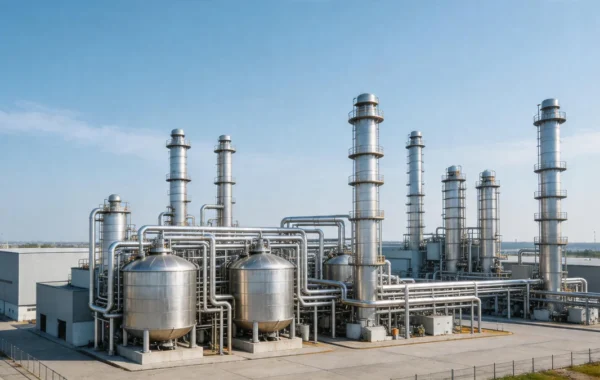
65 projects, 2.8 million tonnes announced — and three plants shut
Roughly one twentieth of announced pyrolysis capacity is running. Why scaling is hard, why two EU instruments disagree about the technology, and what November changes.

Roughly one twentieth of announced pyrolysis capacity is running. Why scaling is hard, why two EU instruments disagree about the technology, and what November changes.
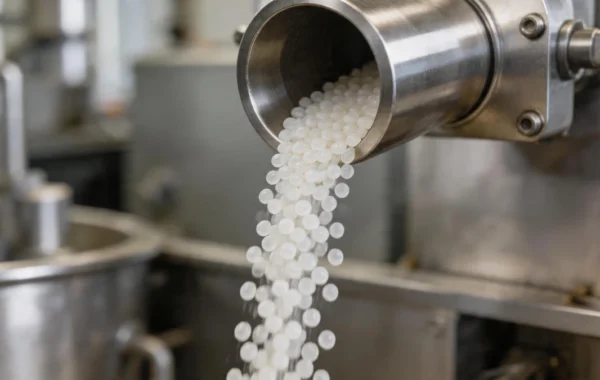
Pellets enter the environment already microplastic-sized. The EU has regulated that pathway specifically, and the December 2026 standards milestone matters more than it looks.
Circular production growth fell from 13.6% to 1.2% a year. 8.7 Mt of output, 19% of demand imported, 12.4% of collected waste recycled outside Europe.
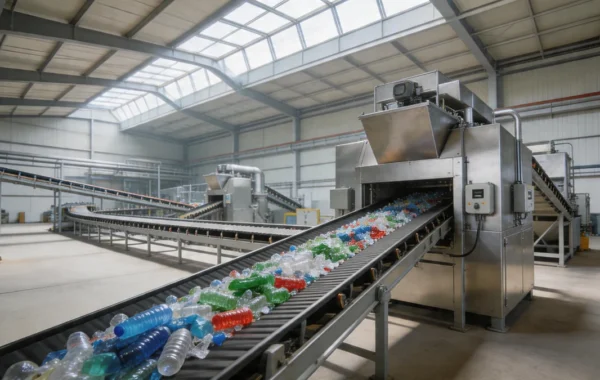
Two dates change how plastic waste moves: 21 May brought new rules and DIWASS, 21 November brings the non-OECD export ban. Why the ban redistributes the problem rather than solving it.
What is chemical recycling? Chemical recycling — also called advanced or molecular recycling — is a family of technologies that break plastic waste back down…
Introduction: two paths to circularity The plastics industry faces a defining question of the 21st century: how do we close the loop on the 400+…
What is polypropylene? Polypropylene (PP) is a thermoplastic polymer made by chain-growth polymerisation of propylene monomer. Discovered independently by several chemists in the early 1950s…
What is PVC? Polyvinyl chloride, universally known as PVC or vinyl, is the world’s third most produced synthetic polymer after polyethylene and polypropylene. Chemically, PVC…
High-density polyethylene — better known as HDPE, or resin identification code 2 — is the workhorse of the rigid plastic packaging world. Every time you…
Polyethylene terephthalate — better known as PET — is the single most recycled plastic in the world. From mineral water bottles to polyester fleece jackets,…