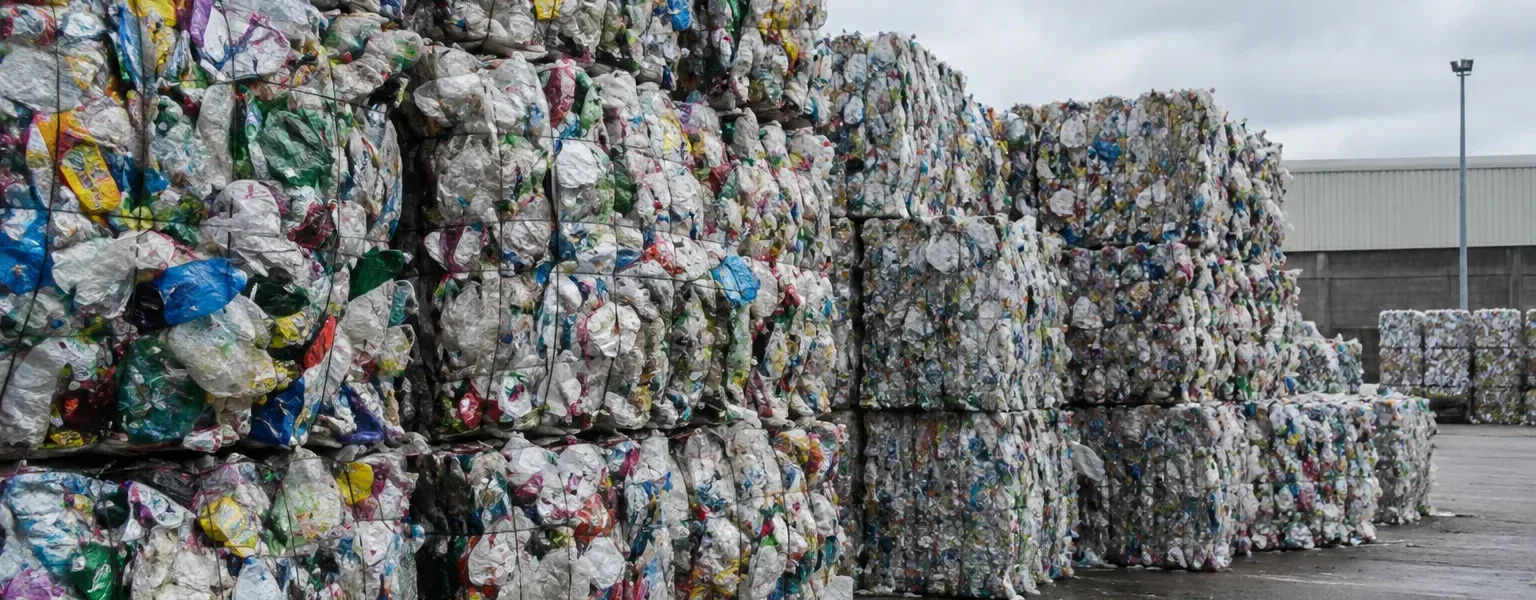
The European Union recycled 42.4% of its plastic packaging waste in 2024, up from 41.6% a year earlier. Eurostat published the figures on 22 October. The plastic packaging recycling rate in the EU is climbing slowly. The 2023 figure was also revised: an earlier release put it at 42.1%. In 2024 the average EU resident generated 35.9 kg of plastic packaging waste and 15.3 kg of it went to recycling. Both numbers rose by 0.6 kg compared with 2023. The average hides a wide spread. Latvia recycles 71.0% of its plastic packaging, Denmark 22.5%. The EU target for the end of 2025 is 50%.
Waste is growing faster than recycling
The ten year view is less flattering than the annual one. Between 2014 and 2024, plastic packaging waste per person grew by 6.1 kg. The amount recycled per person grew by 3.4 kg. The recycling rate improves, yet the volume that is never recycled keeps getting larger.
The same pattern appears across all packaging materials. The EU generated 81.5 million tonnes of packaging waste in 2024, or 181.0 kg per person. That is 3.2 kg more per person than in 2023 and 19.6 kg more than in 2014. Paper and cardboard made up 40.8% of the total. Plastics followed with 19.9%, then glass with 18.1%, wood with 16.2% and metal with 4.8%.
A recycling rate measures a share, not a quantity. It compares the weight sent to recycling with the weight of waste generated. When both grow, the rate can rise while more material still ends up incinerated or landfilled. This is where a circular economy in which materials return to production runs into trouble. Higher percentages help. The residual stream will only shrink when waste generation grows more slowly.
Latvia leads, Denmark trails
Country results range from above 70% to just over 20%. Latvia tops the table, followed by Belgium and Poland. Czechia comes fourth. Italy ranks sixth with 50.1%, up from 49% in 2023. At the bottom sit Denmark, Finland and France.
| Country | Plastic packaging recycling rate 2024 | Position |
|---|---|---|
| Latvia | 71.0% | 1st |
| Belgium | 58.2% | 2nd |
| Poland | 56.0% | 3rd |
| Czechia | 53.7% | 4th |
| Italy | 50.1% | 6th |
| France | 27.4% | third lowest |
| Finland | 26.9% | second lowest |
| Denmark | 22.5% | lowest |
Several of the leaders already clear the 50% target set for 2025. The group mixes small and large markets from different regions, so size alone does not decide the outcome. At the other end, France has 27.4% and sits next to two Nordic countries. Cyprus, with 27.8%, is only slightly ahead of France. Eurostat applies one EU methodology to all member states, which makes the table comparable across borders.
How far away is the 50% target?
Directive 2018/852, which amended the EU packaging directive, sets two recycling targets for plastic packaging: 50% by the end of 2025 and 55% by 2030. In 2024, one year before the first deadline, the EU average stood at 42.4%. The latest annual gain was under one percentage point. A step of that size would leave the average well short of 50% for 2025. The 2025 data will show which countries made it.
The rules around these targets have changed in the meantime. The Packaging and Packaging Waste Regulation (PPWR), the EU law that replaces the old directive, entered into force on 11 February 2025 and has applied since 12 August 2026. Our report on the first obligations and first friction under PPWR covers what changed in August. Its main mandatory shares of recycled content in plastic packaging generally start on 1 January 2030.
Beverage bottles already run on a separate track. The rules on 25% recycled content in PET bottles as a national average create demand for collected PET today. For other packaging, the pull from recycled content mandates arrives later than the 2025 recycling deadline.
Two readings of one dataset
Producers and environmental groups drew different lessons from the release. Katharina Schlegel Thummer, circularity director at Plastics Europe, said that “Plastic packaging waste per capita reflects a complex reality”. Lauriane Veillard, policy officer at Zero Waste Europe, pointed to the ten year trend: “While recycling increases, the amount of virgin production increases even more”. She also backed deposit return schemes (DRS), in which consumers pay a small deposit and get it back when they return the container. “DRS is an effective tool to support high-quality collection that is key to supporting high-quality recycling,” she said.
Processing capacity is the second bottleneck. Plastics Recyclers Europe reported at the end of 2025 that Europe lost nearly 1 million tonnes of recycling capacity in about three years. Preliminary data for 2025 showed closures speeding up. The association blamed high operating costs and weak competitiveness against virgin plastics and cheaper imports. The Plastics Europe data showing circularity stalling point in the same direction.
The industry starts from these numbers: each EU resident generates 35.9 kg of plastic packaging waste and 15.3 kg of it is recycled. Reaching 55% by 2030 means more collected material and enough plants in Europe to process it.
Frequently asked questions
What was the EU plastic packaging recycling rate in 2024?
According to Eurostat, the EU recycled 42.4% of its plastic packaging waste in 2024. The revised figure for 2023 is 41.6%.
Which EU countries recycle the most plastic packaging?
Latvia leads with 71.0%, followed by Belgium with 58.2%, Poland with 56.0% and Czechia with 53.7%. The lowest rates were in Denmark (22.5%), Finland (26.9%) and France (27.4%).
What are the EU targets for plastic packaging recycling?
Directive 2018/852 requires 50% of plastic packaging to be recycled by the end of 2025 and 55% by 2030. In 2024 the EU average was 42.4%.


[…] Eurostat 2024 data on plastic packaging recycling in the EU […]