Textiles are among the last large waste streams in Europe without a dedicated financing system. The targeted revision of the Waste Framework Directive, which entered into force on 16 October 2025, changes that: producers of clothing, footwear and household textiles will cover the costs of collection, sorting and recycling. Member States have until 17 June 2027 to transpose the revision and until 17 April 2028 to establish extended producer responsibility schemes, with micro-enterprises given an additional year. One obligation is already running.
The obligation that started in January
From 1 January 2026, and every five years thereafter, Member States must survey collected mixed municipal waste to determine the share of waste textile products, send the data to producer responsibility organisations to inform the placement of collection points, and publish the survey.
This is more consequential than it sounds. Nobody currently knows with any precision how much textile sits in the residual bin, which means nobody can size the infrastructure or the fees an EPR scheme will need. Requiring the measurement before requiring the scheme is unusually sensible sequencing, and it means the schemes launching in 2028 will be designed against data rather than estimates.
Scope and mechanism
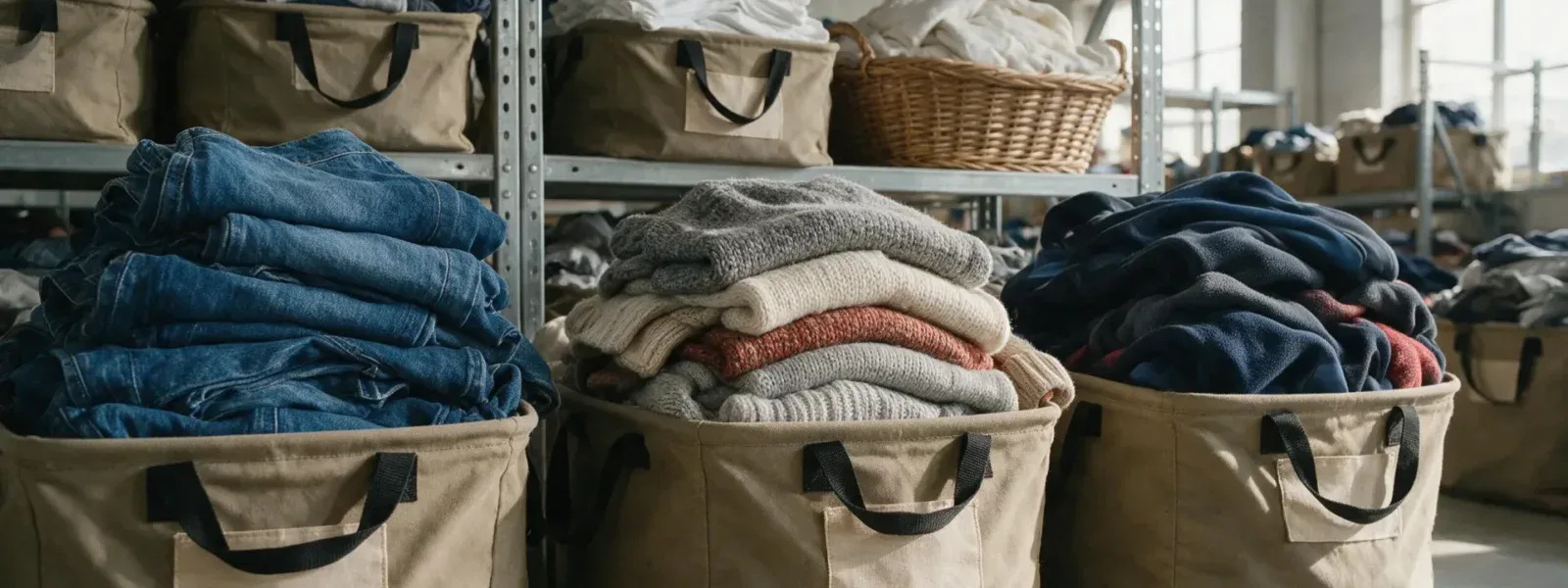
The scope is wider than the word “clothing” suggests: it covers clothing and footwear, hats, blankets, bed and kitchen linen, and curtains. In practice, most household textiles.
Producers will fund collection, sorting and recycling. The directive permits eco-modulated fees, allowing authorities to charge more for less sustainable products and to incentivise the use of recycled fibres in new products. That is the same mechanism used in packaging, and its effectiveness depends entirely on whether the modulation is steep enough to change design decisions rather than merely to raise revenue.
Why textile recycling is technically hard
Collection is the easy part. What follows is not.
A contemporary garment is usually a fibre blend — cotton with polyester, often with elastane — plus sewing thread, zips, buttons, prints and glued labels. Separating those components is technically possible and expensive, and the value of the recovered fibre rarely covers the cost of recovering it. Fibre-to-fibre recycling at scale remains the exception rather than the rule.
The dominant route therefore stays reuse: sorting and resale of second-hand clothing. Material that fails that test typically ends up in low-value applications — industrial wipers, insulation, fillings. That is recovery, and it is not a closed loop.
Eco-modulation matters here more than in packaging precisely because of this. A fee that reflects fibre composition could genuinely influence whether a producer chooses a monomaterial or a blend that is easier to manufacture and impossible to recycle.
What the revision will and will not deliver
It will deliver infrastructure and a financing mechanism. Today the cost of handling clothing thrown into residual waste falls on municipalities, which means on residents. After EPR it falls on whoever placed the product on the market. That shift is the substance of the reform.
It will not, on current technology, turn old clothes into new ones at scale. Expecting that from 2028 would be to misread what the directive does. Most collected textile will continue to go to reuse or to lower-value applications, and the honest framing of the reform is that it makes the system properly funded and measured — which is the precondition for fibre-to-fibre recycling becoming viable later, not a substitute for it.
Frequently asked questions
When must EU textile EPR schemes be in place?
By 17 April 2028, with micro-enterprises granted an additional year. Member States must transpose the revised Waste Framework Directive by 17 June 2027; the revision entered into force on 16 October 2025.
Which products does textile EPR cover?
Clothing and footwear, hats, blankets, bed and kitchen linen, and curtains. Producers will cover the costs of collection, sorting and recycling for these products.
What obligation applies from 1 January 2026?
From that date, and every five years thereafter, Member States must survey collected mixed municipal waste for the share of waste textiles, provide the data to producer responsibility organisations to inform collection point placement, and publish the results.
Why is recycling clothing so difficult?
Modern garments are fibre blends with sewing thread, zips, buttons, prints and glued labels. Separating those components is costly and the value of recovered fibre rarely covers the cost, so reuse and low-value applications dominate.
Related reading: the circular economy explains the producer responsibility model this reform extends to textiles, microplastics covers fibre release from textiles as an environmental pathway, and plastic recycling is relevant because most modern garments are substantially synthetic.
Source: European Commission, revised Waste Framework Directive covering textiles and food waste, in force since 16 October 2025.