What is polypropylene?
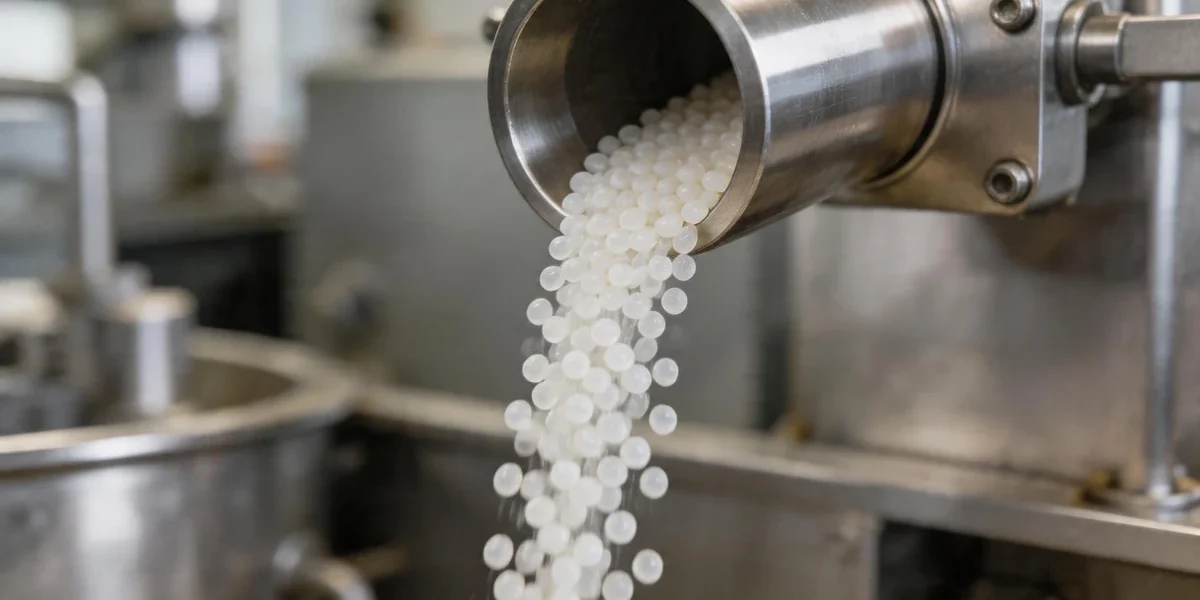
Polypropylene (PP) is a thermoplastic polymer made by chain-growth polymerisation of propylene monomer. Discovered independently by several chemists in the early 1950s and commercialised by Giulio Natta and Karl Ziegler (work that earned the 1963 Nobel Prize in Chemistry), PP has grown into the world’s second-most produced commodity plastic after polyethylene. Global demand exceeds 80 million tonnes per year, and in Europe alone PP accounts for roughly 19-20% of all plastics converted into products. It is the workhorse behind car bumpers, yogurt pots, bottle caps, reusable crates, non-woven medical gowns, textile fibres, living hinges, big bags (FIBCs), and thousands of other daily items.
From a recycler’s standpoint, PP is both an enormous opportunity and a persistent headache. It is lightweight, tough, chemically resistant and thermally stable enough to survive multiple extrusion cycles — in principle ideal for circular loops. Yet historically PP lagged PET and HDPE in recycled output because its applications are highly fragmented (dozens of grades, colours and additives) and because most European kerbside schemes only recently started capturing rigid PP packaging systematically. That is changing rapidly. PP is now the fastest-growing recycled polymer in Europe, with double-digit annual capacity additions from flagship plants such as Borealis/Borcycle M, LyondellBasell’s Circulen, NextChem, Viridor and many converter-side wash lines.
The sections below cover polypropylene recycling in detail: polymer properties, feedstock sources, the mechanical recycling process, food-grade rPP, quality parameters, end-use applications and market outlook.
Properties that make PP recyclable
Understanding PP’s physical profile explains why it behaves the way it does on a wash line and in a compounding extruder.
- Density: 0.90-0.91 g/cm³. PP is the lightest of the common commodity plastics — lighter than water, lighter than HDPE (~0.95) and LDPE (~0.92). This enables sink-float separation in wet density tanks, where PP floats and heavier contaminants such as PET, PVC, PS and glass sink.
- Melt Flow Index (MFI, ISO 1133, 230 °C / 2.16 kg): 3-35 g/10 min across the product spectrum. Injection moulding grades cluster around 10-35, extrusion and blow moulding around 2-8, fibre grades above 25. Recyclers must sort or blend by MFI, because mixing a 35 MFI cap flake with a 3 MFI crate regrind yields a compound that runs poorly in either process.
- Heat resistance. PP has a melting point of 160-165 °C (homopolymer) and a Vicat softening point around 150 °C. It is the only commodity plastic that reliably survives a dishwasher and autoclave — which is why it dominates reusable food containers and medical trays.
- Mechanical behaviour. Homopolymer PP is stiff (flexural modulus 1,300-1,600 MPa) but relatively brittle at low temperature. Copolymer grades (random and impact / block copolymer) trade stiffness for notched Izod impact, with impact copolymers reaching 10-50 kJ/m² at 23 °C and still performing below 0 °C — essential for automotive bumpers.
- Chemical resistance. PP resists acids, alkalis and most solvents, so it survives aggressive post-consumer soils. It is, however, susceptible to oxidation; recyclers must add stabiliser packages to compensate for the antioxidants depleted during first use.
Compared to HDPE recycling, PP sits in a similar mechanical family but runs about 30 °C hotter in the extruder, is stiffer but more notch-sensitive, and has a narrower processing window — meaning process control in a recycling plant matters even more.
Why PP is the fastest-growing recycled polymer
Three forces are converging to make rPP the growth story of European plastics circularity.
1. Regulation. The EU Packaging and Packaging Waste Regulation (PPWR), adopted in 2024/2025, sets mandatory recycled-content targets for plastic packaging: by 2030, contact-sensitive packaging must contain at least 10% recycled plastic (rising to 25% by 2040), and non-contact-sensitive packaging 35%. PP dominates rigid non-bottle packaging (tubs, trays, pots, caps) and much of it is contact-sensitive, so the regulation creates a structural pull for food-grade rPP.
2. Brand commitments. Unilever, Nestlé, PepsiCo, Danone, Procter & Gamble and virtually every FMCG major have pledged 25-50% recycled content by 2025-2030. Until 2022 these pledges were met almost entirely with rPET. PP has now become the second front, and brands are paying a premium for certified food-grade rPP.
3. Collection improvements. Germany, Austria, Belgium, the Netherlands and Spain have expanded rigid-packaging collection to include pots, tubs and trays. NIR-equipped material recovery facilities (MRFs) can now route PP into a dedicated bale grade (often described as “PP 325” or similar EU specifications). Bale availability has roughly tripled since 2018.
Against that demand, supply of high-quality rPP remains tight. Prices for natural food-approval-track rPP pellets have traded at EUR 1,500-2,200/t over the 2022-2025 window, frequently at a premium over virgin PP — an inversion almost unknown before 2020.
Sources of post-consumer and post-industrial PP
A recycler’s input mix defines everything downstream: sorting strategy, wash chemistry, odour, colour and ultimate end-use. The main PP feedstocks are:
Post-consumer rigid packaging. Yogurt pots, margarine tubs, ice-cream containers, ready-meal trays, drink cups, detergent closures, shampoo caps. Typically collected in mixed rigid bales with small fractions of PS, PET and HDPE. Soiling is moderate (food residues, labels, PE/EVOH liners).
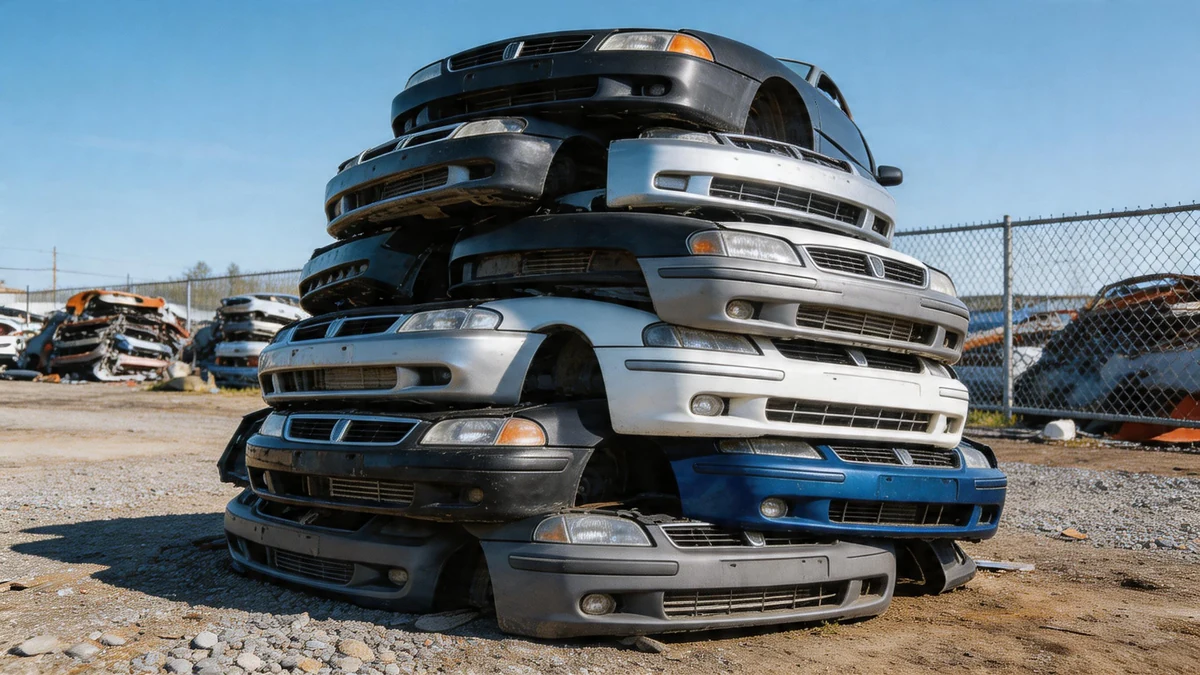
Automotive bumpers and interior trim (TPO). Thermoplastic polyolefins — PP blended with EPDM rubber and talc — form nearly all modern European car bumpers. End-of-life vehicle (ELV) dismantlers and body shops are a prime source. Bumper regrind has a consistent impact-copolymer chemistry, very low moisture, and commands premiums up to EUR 900-1,100/t when de-painted.
Caps and closures. Beverage caps (after PET bottle-to-bottle sorting removes them), detergent caps, cosmetic closures. High MFI (typically 10-20), mostly food-grade virgin origin, minimal contamination. One of the most prized rPP streams.
Big bags (FIBCs) and woven PP sacks. Post-industrial or post-agricultural. Raffia grade, typically pigmented, used for plastic lumber, pallets and non-critical injection parts.
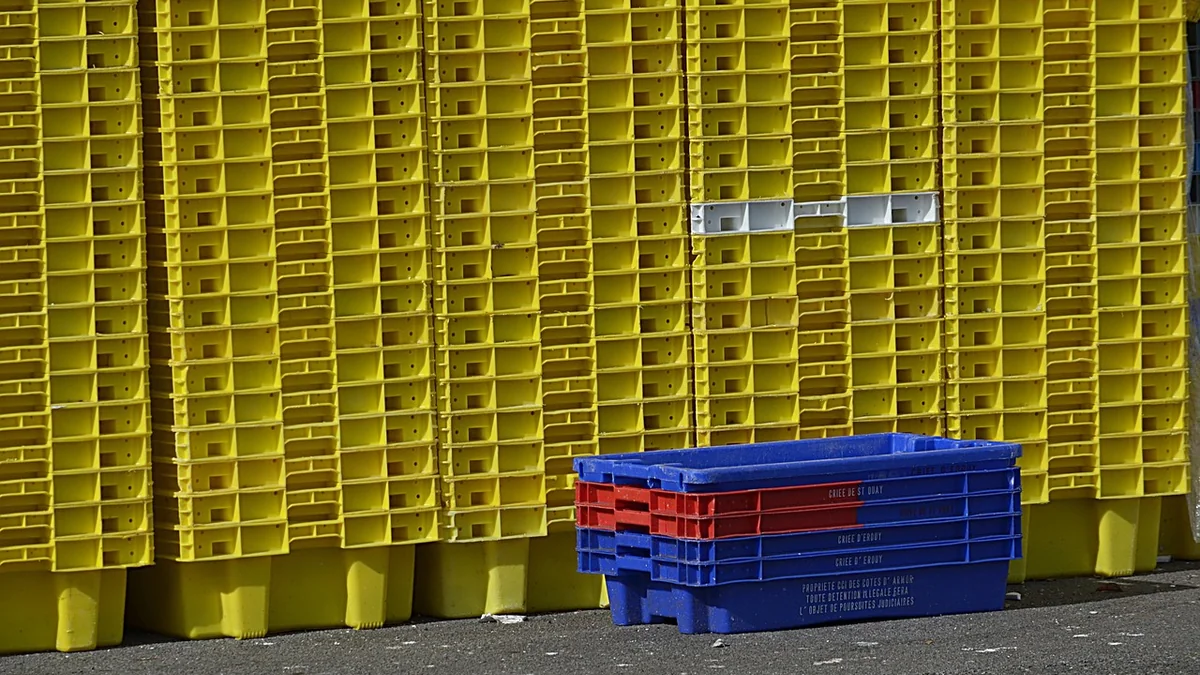
Crates, pallets and drums. Logistics and industrial returnable transport items. Often single-polymer, single-colour batches from one operator — an ideal closed-loop input.
Medical and textile non-wovens. Post-industrial trim from diaper, gown and filter manufacturing. High-purity but light-bulk-density, usually densified before extrusion.
Post-industrial scrap. Moulder purgings, off-spec parts, sprues and runners. Near-virgin quality, often recycled in-house.
Professional traders such as Plastic Trader and odzysk.pro — PP B2B aggregate these streams across Central Europe, grading regrind and baled material by polymer, colour, MFI and contamination so compounders can buy predictable lots.
Resin code 5 and polymer identification
PP carries the Resin Identification Code 5 inside the triangular recycling symbol, standardised by ASTM D7611 and mirrored by ISO 1043. The code is moulded, printed or embossed onto most rigid PP packaging. In a modern MRF, however, RIC symbols are largely irrelevant — sorting is done by Near-Infrared (NIR) spectroscopy, which identifies PP by its characteristic absorption bands at roughly 1,200 and 1,700 nm. NIR sorters (Tomra Autosort, Pellenc Mistral+, Steinert UniSort) reach 95%+ purity on PP at throughputs of 6-10 t/h per lane.
Challenges for NIR include: black PP (carbon black absorbs all IR — solved by carbon-black-free “detectable black” masterbatches or by hyperspectral / laser-induced sorting); multilayer structures with PE or EVOH (misidentified as blends); heavily printed film (ink obscures the polymer signature).
The PP recycling process
A modern European mechanical recycling line for post-consumer PP rigids looks as follows.
1. Bale opening and pre-sort. Bales are broken, a manual picking cabin or optical sorter removes obvious contaminants (wood, metal, PVC, tinplate). Ferrous and non-ferrous metal separation uses overband magnets and eddy currents.
2. Size reduction. A shredder reduces material to 30-60 mm, then a granulator cuts to 8-15 mm flake.
3. Wet wash. Pre-wash at 40 °C removes loose soil; a caustic hot wash (NaOH 1-3%, 80-90 °C, 10-15 minutes) removes glues, label adhesives, fats and proteins.
4. Density separation. The wet flake enters a sink-float tank (or hydrocyclone) where PP floats and PET, PVC, metals and mineral contaminants sink. This step is the reason PP wash lines work: density gives a clean, cheap split.
5. Friction and rinse. Mechanical friction washers remove residual film and fines. Rinse water is filtered and recirculated.
6. Drying. Mechanical dewatering plus thermal drying to ≤0.3% moisture, mandatory before extrusion.
7. Extrusion, filtration and pelletising. Single- or twin-screw extruder at 200-230 °C, melt filters at 80-150 µm (laser screens or back-flush filters), underwater or strand pelletising. This is where stabilisers, compatibilisers and pigments are added.
8. Deodorisation. For food-contact and cosmetic applications, rPP pellets pass through a deodorisation silo — hot air or nitrogen at 90-110 °C for 12-48 hours — that strips residual volatiles (limonene, aldehydes, fatty-acid degradation products) responsible for the characteristic “recycled smell”. Advanced lines add vacuum degassing in the extruder or super-critical CO₂ wash.
Yields from a balanced mixed-rigid PP bale run 70-80% pellet output; the balance is wash water sludge, off-spec fines, and non-PP rejects.
PP food-grade challenges: NEXTLOOPP and EFSA
Unlike PET — where bottle-to-bottle recycling has been routine since the early 2000s — food-contact rPP is a new frontier. The EU Regulation 2022/1616 on recycled plastic materials requires every food-contact recycling process to be assessed by EFSA (European Food Safety Authority) against a “super-clean” challenge-test protocol: can the process decontaminate PP spiked with surrogate chemicals down to an exposure below 0.0025 µg/kg body weight per day?
Traditional PP mechanical recycling cannot meet that bar because post-consumer PP has absorbed fats, fragrances, cleaning agents and unknowns during its service life. The breakthrough is NEXTLOOPP, a consortium led by Nextek (UK) bringing together more than 50 brands, recyclers and equipment suppliers. NEXTLOOPP combines three innovations:
- PPristine fluorescent marker sorting or advanced NIR to pull a “food-grade” fraction out of mixed PP bales.
- Decontamination extrusion with vacuum devolatilisation reaching ppb-level residuals.
- Solid-state post-condensation / deodorisation in nitrogen at 120-140 °C for 6-24 hours.
In 2023-2024 NEXTLOOPP-derived rPP received positive EFSA opinions and the first commercial-scale food-contact rPP pellets became available. Borealis Bornewables, Viridor Avonmouth and Morssinkhof are among the first European producers. Volumes remain small (tens of thousands of tonnes) versus a demand that could approach one million tonnes by 2030 under PPWR.
Forms of recycled PP
Recycled PP is sold in several physical and commercial forms.
Regrind (flake). Washed or unwashed flake, 4-12 mm. Cheapest form, used by compounders who have their own extrusion. Natural, mixed-colour or sorted by colour.
Pellets. The standard tradable form. Sub-grades:
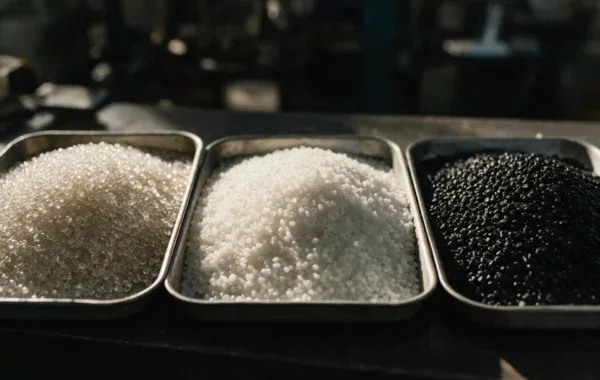
- Natural rPP — untinted or near-white, from clear packaging and caps; highest value, used where colour freedom matters.
- Grey / off-white rPP — from mixed post-consumer; dominant bulk grade.
- Black rPP — homogenised with carbon black, masking colour variation; used for pipes, automotive under-bonnet, crates, plastic lumber.
- Coloured rPP — custom-pigmented compound, often from dedicated closed-loop streams.
Compounds. rPP blended with talc (20-40%), glass fibre (10-30%), EPDM, mineral fillers or virgin PP to hit a specific automotive or appliance spec. Increasingly sold under brand names like Borcycle, Circulen, NextChem Eco, PolyMirae Seenogreen.
Quality parameters for recycled PP
When buying or specifying rPP, the datasheet must include at minimum:
- MFI (ISO 1133, 230/2.16). Target window defined by the conversion process. Variability of ±2 g/10 min within a lot is acceptable; larger scatter means blend instability.
- Density (ISO 1183). 0.900-0.910 for natural; fillers and pigments push it up.
- Ash content (ISO 3451). Mineral residue from fillers, talc, labels, dust. <0.5% is premium; up to 2-3% tolerable for industrial applications.
- Moisture (Karl Fischer). <0.1% for injection, <0.05% for thin-wall or fibre.
- Tensile properties (ISO 527). Yield stress 22-34 MPa, elongation at break >50% for impact copolymer grades.
- Notched Izod / Charpy impact (ISO 180 / 179). Key for automotive and crate applications.
- Odour rating (VDA 270). Automotive interior specifies grade 3 or better.
- Colour (Lab*, ΔE vs. standard). Lot-to-lot consistency.
- Volatiles / FOG (VDA 278). Relevant for cabin-air applications.
- Heavy metals and SVHC. REACH, RoHS, Toy Safety Directive, Proposition 65 — depending on market.
Reputable suppliers deliver a Certificate of Analysis per lot plus ISCC PLUS or EuCertPlast chain-of-custody certification.
Applications of recycled PP

Where does rPP actually end up? The largest volume destinations today are:
Automotive. Bumper regrind loops back into bumpers (closed loop at Stellantis, Renault, VW), wheel arch liners, battery trays, interior trim, under-bonnet ducts, HVAC housings. Renault’s “Re-Factory” in Flins and Stellantis’s Circular Economy Hub are full-scale examples. Specifications typically require ≥25% PCR content, VDA 270 grade 3, and consistent impact.
Logistics crates and pallets. Closed-loop systems where retailers (IFCO, Euro Pool, CHEP) reclaim their own crates and grind them into new ones. This is the cleanest, simplest rPP loop and usually runs at 95-100% recycled content.
Non-food rigid packaging. Detergent bottles (where HDPE rPP blends are permitted), cosmetic jars, paint pails, non-food tubs.
Food-contact packaging (emerging). Yogurt pots, butter tubs, ready-meal trays containing 30-50% EFSA-approved rPP. Still a premium niche; expected to scale after 2027.
Plastic lumber and outdoor products. Benches, decking, fence posts, noise barriers, cable drums. Tolerant of mixed colour and moderate contamination.
Construction. Geotextile fibres, drainage components, sub-floor protection.
Appliances. Washing-machine detergent drawers, vacuum-cleaner housings, small-appliance internals. Typically 20-40% rPP compounded with virgin.
Textiles and non-wovens. Post-industrial rPP returns to fibre spinning for carpets, automotive trunk liners, and geotextiles.
Challenges in PP recycling
Even with rapid growth, several technical and economic barriers persist.
Odour. The single biggest complaint from brand owners testing rPP. Sources: fatty-acid oxidation products (aldehydes, ketones), fragrance residues, sulphur compounds from personal-care packaging. Deodorisation silos, vacuum devolatilisation and CO₂ wash are partial solutions. Full odour elimination today costs EUR 200-400/t on top of wash cost.
Multilayer tubs and trays. EVOH and PE barrier layers, PET lids welded to PP cups, PS/PP coextrusions. These reduce yield and pollute the melt filter. Mono-material redesign (all-PP structures with SiOx or nano-clay barriers) is the long-term answer.
Colour mix. Mixed bales inevitably produce grey or brown pellets, unusable where brand aesthetics demand white or vivid colour. Over-sorting by colour (black / natural / colour-mix streams) improves value but cuts yield.
Additive build-up. Each recycling cycle consumes antioxidants and UV stabilisers. Without re-stabilisation, rPP degrades on the second or third loop. Suppliers such as BASF (Irganox series), SONGWON and Clariant offer dedicated re-stabiliser packages for rPP.
Carbon black and detectability. Automotive-black parts require carbon-black-free formulations to be NIR-sortable; only partially adopted.
Economic volatility. rPP pricing decouples from virgin PP in ways that expose recyclers to margin squeeze when oil prices drop. Regulatory quotas help stabilise demand.
PP recycling rates in the EU
According to Plastics Europe, Conversio and EuRIC reports, the 2022-2024 European picture for PP is roughly:
- PP placed on EU market: 9-10 million tonnes/year in products; ~3.2 million tonnes in packaging.
- PP packaging collected: ~45-50% of placed-on-market.
- PP packaging actually recycled into new products: ~23-28%.
- Automotive PP recycled: 50-60% (ELV regime drives high recovery).
- PP energy recovery: ~35-40%.
- PP landfilled: declining rapidly, now <20% in most member states, near zero in Germany, Austria, Netherlands, Belgium and Scandinavia.
Targets under PPWR and the EU Green Deal imply recycling rates must approach 50% of all PP packaging by 2030 and 55% by 2035. This implies roughly a doubling of current capacity — a significant but plausible investment programme.
FAQ
Is all PP recyclable?
Mechanically yes — any PP grade can be melted, filtered and re-pelletised. In practice, recyclability depends on collection (does it reach a sorting facility?), sortability (NIR-detectable colour, mono-material design) and contamination (food residue, mixed polymers). Rigid PP packaging and automotive PP are widely recycled; flexible multilayer PP laminates and heavily pigmented small items are still mostly lost.
Can recycled PP be used for food packaging?
Yes, but only from EFSA-approved processes under Regulation 2022/1616. As of 2024-2025, the NEXTLOOPP consortium and a handful of European producers (Borealis, Viridor, Morssinkhof) hold positive EFSA opinions. Volumes are growing from a small base. Most rPP today still goes to non-food applications.
Why does recycled PP sometimes smell?
Post-consumer PP absorbs fats, fragrances and cleaning agents during use. When re-melted, these volatilise and remain at ppm-ppb levels. Deodorisation, vacuum extrusion and CO₂ wash reduce but rarely eliminate odour. Natural rPP from caps or industrial sources has much lower odour than mixed-rigid rPP.
What’s the difference between PP regrind and rPP pellet?
Regrind is washed flake, sold cheaper but requires the buyer to re-extrude and stabilise. rPP pellet is melt-filtered, stabilised, deodorised and quality-controlled — ready to drop into an injection machine. Pellet typically costs EUR 150-400/t more than regrind.
How many times can PP be recycled?
Under good stabilisation, mechanical recycling preserves usable properties for 3-7 cycles. MFI drifts upward each pass (chain scission), impact drops, colour darkens. Most rPP today is blended with 30-70% virgin in end-use compounds, which extends effective cycle life almost indefinitely.
For commercial supply of washed PP regrind, natural rPP pellets and compounded rPP across Europe, our partners Plastic Trader and odzysk.pro — PP B2B handle B2B lots from 25 t. For related polymer streams, see our guides on HDPE recycling and general plastic recycling.

[…] polymer-agnostic means the criteria do not privilege PET over polyolefins. A regranulate from mixed polypropylene is judged by the same framework as food-grade PET flake. Whether it passes depends on the material, […]