Buyers new to recycled polymers usually start with the wrong question. They ask which recyclate is best. The useful question is which one the application can accept, because rPET, rHDPE and rPP are not competing grades of the same product. They come from different waste streams, they carry different approvals, and their prices sit hundreds of euros apart for reasons that have little to do with quality in the abstract. Most of that price gap turns out to be about colour rather than polymer, which is not where a first-time buyer looks.
What the price curve actually says
These are assessed prices from the end of June 2026, delivered duty paid to Northwest Europe.
| Grade | EUR per tonne |
|---|---|
| rPET flakes | 1,331 – 1,341 |
| rPET pellets | 1,718 – 1,728 |
| rHDPE pellets, natural | 1,705 – 1,715 |
| rHDPE pellets, white | 1,500 – 1,510 |
| rHDPE pellets, grey | 1,111 – 1,121 |
| rPP pellets, black | 960 – 970 |
Read down that column and one pattern dominates. The spread inside rHDPE, from grey to natural, is roughly 600 euros per tonne. That is a bigger gap than the one between grey rHDPE and black rPP. Colour, not polymer, is doing most of the pricing work.
The reason is that colour is irreversible. A natural pellet can be pigmented to any shade a customer wants. A grey one cannot be made natural again, so it can only serve applications where appearance does not matter. Every step down the colour ladder removes end markets, and the price follows.
rPET: the one with a food-contact route
rPET is the only one of the three with an established, regulated path back into food contact. That single fact shapes its whole market. It is why deposit return systems matter to PET more than to any other polymer, why bottle-to-bottle capacity is discussed separately from other recycling, and why food-grade rPET carries documentation obligations that technical grades never see.
The flake-to-pellet gap in the table, close to 390 euros per tonne, is the cost of the extra processing and decontamination steps that turn a washed flake into a material a converter can run and a food safety assessor can accept. Buying flakes is cheaper only if you have the equipment and the approvals to finish them yourself.
Typical applications: beverage bottles, thermoformed trays, film, and polyester fibre. Details of the process are in our guide to PET recycling.
rHDPE: sorted by colour, priced by colour
Recycled HDPE splits into three commercial grades that behave almost like three different materials.
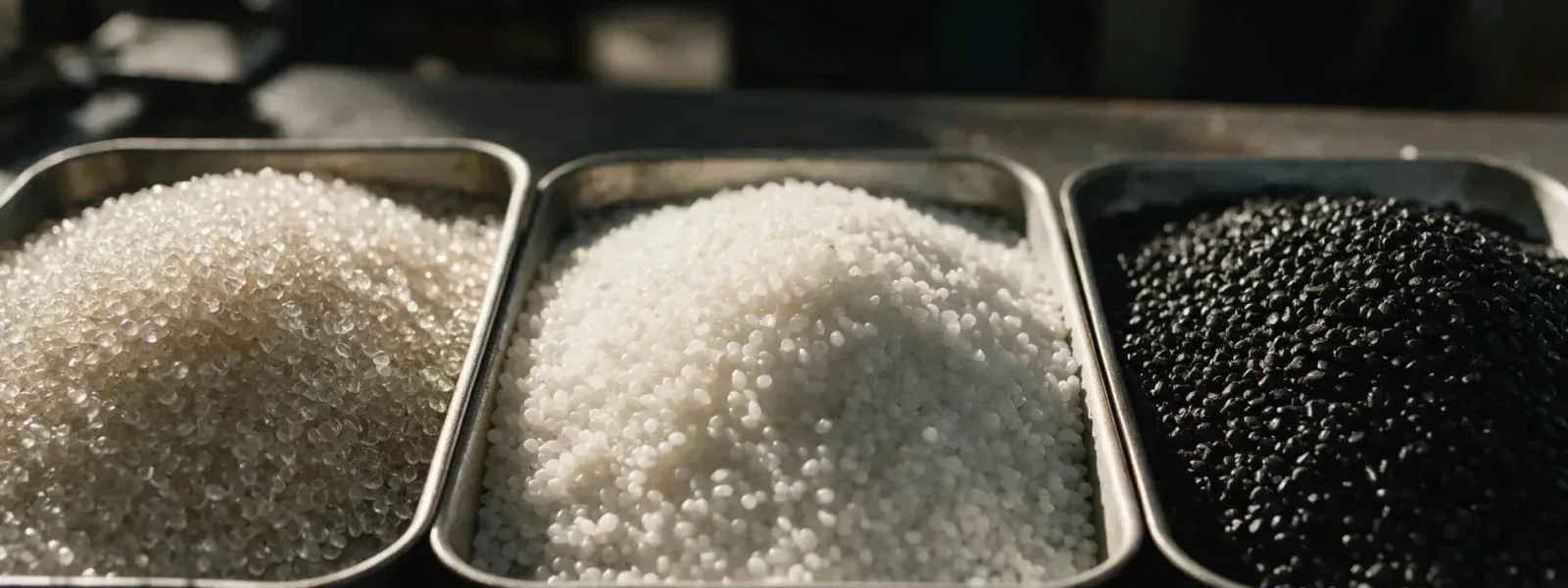
Natural rHDPE comes mainly from milk and household chemical bottles. It is the closest thing to a drop-in replacement for virgin, and it prices accordingly, at the same level as rPET pellets in the table above. White sits below it, useful wherever a light finish is acceptable but true colour matching is not required. Grey and mixed material goes to pipe, crates, planters and technical parts, where structural performance is the specification and colour is not mentioned in it.
A specification asking for rHDPE without naming a colour grade is not a specification. It is a request for a quotation the supplier cannot price. Our note on HDPE recycling covers the properties behind those grades.
rPP: the cheapest, and the reason why
Black rPP sits at the bottom of the curve, and it fell 3.3% month on month into that position at the end of June 2026. Two things put it there. Black is the end of the colour ladder, so the material has nowhere left to go except applications that were going to be dark anyway. And polypropylene arrives from a more mixed input stream than PET or HDPE bottles, which makes consistency harder to guarantee batch to batch.
Cheap does not mean poor. For transport crates, automotive parts, garden furniture and industrial packaging, black rPP is often the correct choice rather than the compromise one. What it does mean is that anyone specifying rPP should be explicit about melt flow, impact requirements and acceptable variation, because the price is low precisely because the input is variable. The PP recycling guide goes into the process detail.
Choosing without over-specifying
The most common expensive mistake is asking for a higher grade than the part needs. Natural rHDPE in a black crate is roughly 600 euros per tonne of appearance nobody will see. Food-grade rPET in a non-food application buys a certification the part does not use.
Work in this order: what does the part have to touch, what does it have to look like, what does it have to withstand. The first question decides whether food-contact approval is in scope at all. The second sets the colour grade, which is where most of the money is. The third sets the technical envelope. Answering them in the opposite order is how specifications end up expensive and hard to source at the same time.
One more constraint is coming. From 1 January 2030, contact-sensitive packaging with PET as its main component must contain 30% recycled content, and contact-sensitive packaging from other plastics 10%, rising to 50% and 25% on 1 January 2040. Those obligations sit on the packaging producer, not on the recycler, which means the sourcing conversation for these grades gets harder before it gets easier.
Frequently asked questions
Which recycled polymer is the most expensive?
At the end of June 2026, rPET pellets and natural rHDPE pellets sat at the top of the curve, both in the range of 1,705 to 1,728 euros per tonne DDP Northwest Europe.
Why is black rPP so much cheaper than natural rHDPE?
Because colour is irreversible. Black material can only go into applications that were going to be dark, while natural material can be pigmented to any shade, so it serves far more end markets.
Can rHDPE and rPP be used in food packaging?
rPET is the polymer with an established, regulated route back into food contact. Food-contact use of other recycled polyolefins is far more restricted and depends on the specific process and authorisation.
Is it cheaper to buy rPET flakes instead of pellets?
Per tonne, yes, by close to 390 euros at end-June 2026 levels. It is only cheaper in practice if you have the equipment and approvals to complete the processing yourself.
What has to be in an rHDPE specification?
At minimum the colour grade, because natural, white and grey differ by hundreds of euros per tonne and serve different applications. Without it a supplier cannot quote meaningfully.