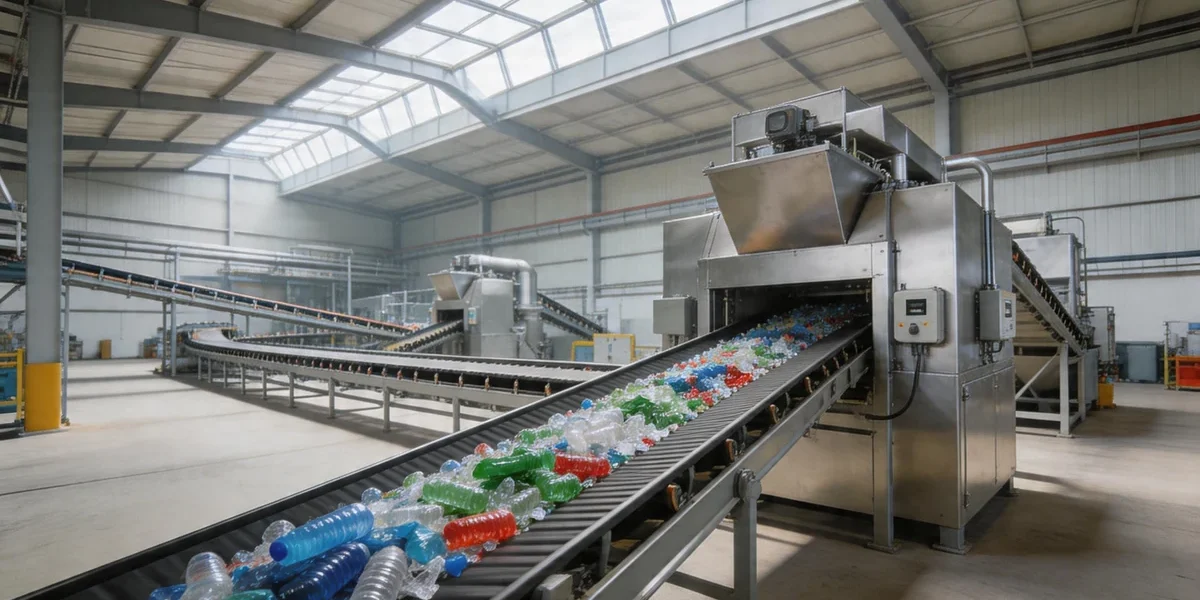
Introduction: two paths to circularity
The plastics industry faces a defining question of the 21st century: how do we close the loop on the 400+ million tonnes of polymers produced globally each year? Two technological families dominate the answer — mechanical recycling, the mature workhorse that has turned bottles back into bottles for decades, and chemical recycling, the emerging challenger that promises to unlock feedstocks mechanical processing cannot touch. The debate over mechanical vs chemical recycling is not academic. Billions of euros in investment, the credibility of EU sustainability targets, and the trajectory of the circular economy all hinge on which technologies scale, where, and how fast.
This guide compares the two approaches honestly — their mechanisms, costs, carbon footprints, polymer quality outcomes, feedstock flexibility, and regulatory standing under the EU Packaging and Packaging Waste Regulation (PPWR). Spoiler: the real answer is not either-or. It is a complementary system where each technology handles the waste streams it is best suited to, and producers, recyclers, and policymakers align around a shared goal: keeping carbon in materials and out of the atmosphere.
How mechanical recycling works
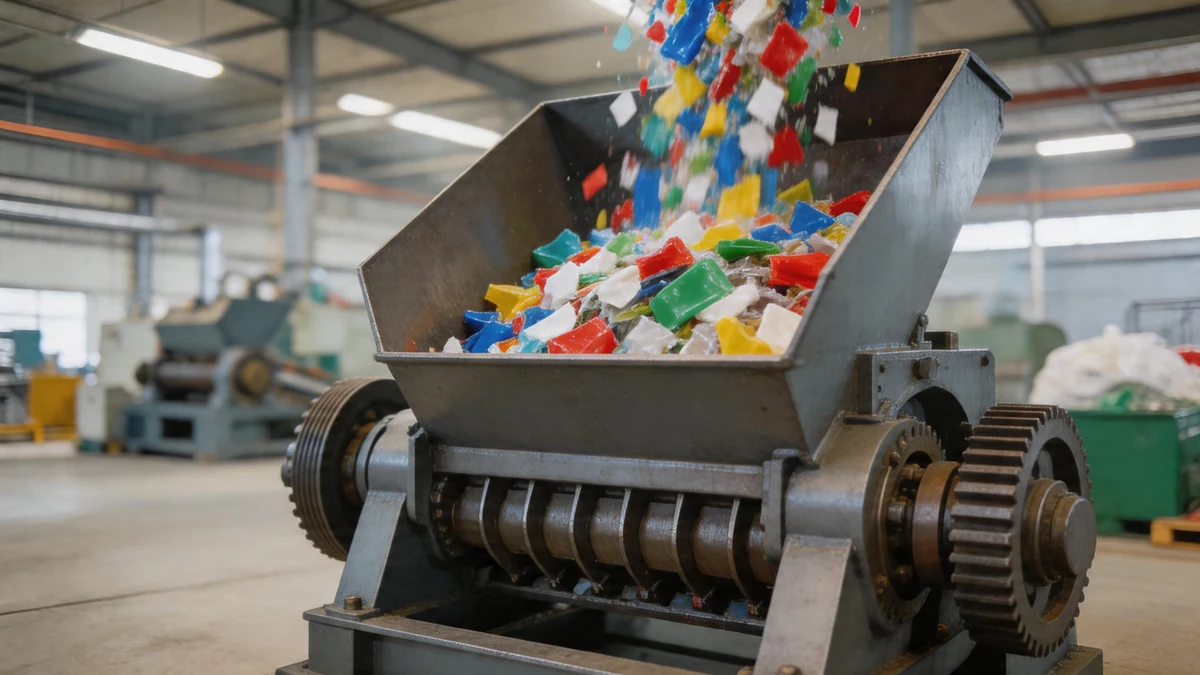
Mechanical recycling is a physical process. No chemical bonds are broken; the polymer chains that came in come out, albeit shorter. The workflow is well-established across Europe and has five core stages.
Collection and sorting. Post-consumer or post-industrial plastic waste arrives at a Material Recovery Facility (MRF). Near-infrared (NIR) optical sorters identify polymer types — PET, HDPE, PP, LDPE, PS — and separate them into mono-material streams. Sorting purity is the single biggest determinant of output quality downstream.
Washing. Sorted bales are shredded into flakes and washed in hot caustic solutions to remove labels, adhesives, food residues, and dirt. For food-grade PET, washing must meet EFSA super-clean standards, typically requiring a second alkaline wash and rinsing.
Shredding and grinding. Clean flakes are reduced further to a uniform particle size, usually 6–12 mm, to ensure consistent melt behaviour in extrusion.
Extrusion. Flakes are melted in a single- or twin-screw extruder at 180–280 °C depending on the polymer. Degassing ports remove volatile contaminants and moisture. Melt filters — screen changers with meshes down to 40 microns — capture solid impurities.
Pelletizing. The molten polymer exits through a die and is cut into pellets (regranulate), cooled, dried, and bagged. These pellets are then sold back to converters, often at 70–90 % of virgin resin price.
The whole process is electromechanical, energy-efficient, and can run continuously. A modern PET bottle-to-bottle line in Germany or Italy handles 30,000–50,000 tonnes per year with energy consumption around 0.8–1.5 MWh per tonne of output.
Advantages of mechanical recycling
Energy and carbon efficiency. Mechanical recycling uses roughly 70–90 % less energy than producing virgin plastic from naphtha. Life-cycle assessments consistently show CO2 savings of 1.0–1.5 tonnes of CO2e per tonne of recyclate for PET and polyolefins — the highest decarbonisation return of any end-of-life option.
Technology maturity. The process is at Technology Readiness Level (TRL) 9 — fully commercial, bankable, and insurable. Thousands of plants operate across Europe, from small 5,000 t/y HDPE lines to 100,000 t/y PET mega-facilities like those operated by Plastic Trader partners and European converters.
Cost competitiveness. Processing costs typically range from €200 to €500 per tonne depending on feedstock quality, automation, and energy prices. Recyclate sells at €900–1,400 per tonne for food-grade rPET, leaving healthy margins when feedstock is clean.
Infrastructure leverage. Existing collection systems — deposit-return schemes (DRS), yellow-bag systems, kerbside recycling — feed directly into mechanical recyclers. No parallel infrastructure is required.
Proven regulatory acceptance. Mechanical recyclate is unambiguously counted toward EU recycled-content targets under the PPWR and Single-Use Plastics Directive. There is no mass-balance controversy, no chain-of-custody dispute.
Limitations of mechanical recycling
The downsides are equally real and explain why chemical recycling exists at all.
Downcycling. Mixed-colour, multi-layer, or contaminated plastics cannot be upcycled to original quality. A clear PET bottle may become a grey fibre for carpet backing — useful, but a one-way ticket out of the packaging loop.
Polymer degradation. Each heat cycle shortens polymer chains. PET loses intrinsic viscosity; polyolefins lose tensile strength. After 3 to 5 mechanical cycles, most polymers degrade below specification for demanding applications and must be cascaded to lower-value uses or incinerated.
Contamination sensitivity. Food residues, mixed polymers, additives, pigments, and NIAS (non-intentionally added substances) accumulate with each cycle. Food-contact approvals require near-pristine feedstock — today only PET and, increasingly, HDPE bottles reliably meet the bar.
Feedstock limitations. Mechanical recycling cannot economically process multi-layer films, laminates, textiles, thermosets, coloured flexible packaging, elastomers, or heavily contaminated post-consumer mixed plastic (PCR mixed). These streams — roughly 40 % of European plastic waste — currently go to energy recovery or landfill.
Colour and aesthetic constraints. Dark or mixed-colour input yields grey or black output, limiting market applications.
How chemical recycling works
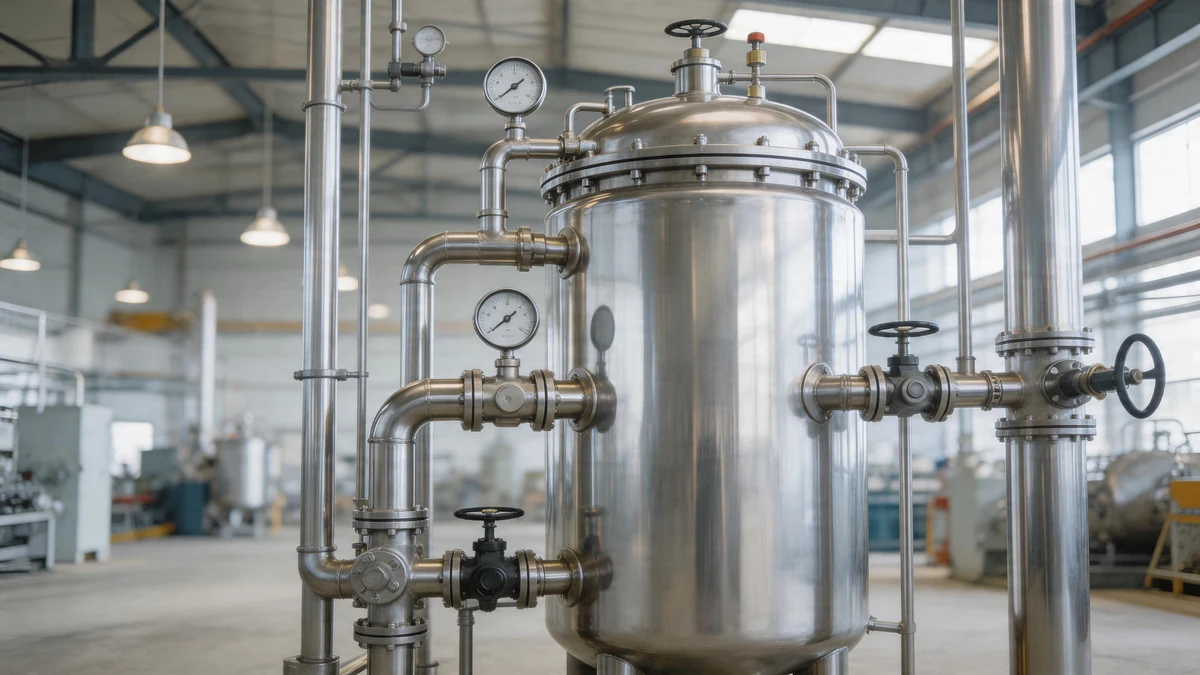
Chemical recycling — also called advanced or molecular recycling — breaks polymer chains back into monomers, oligomers, or hydrocarbon feedstocks that can be re-polymerised into virgin-equivalent plastics. There are four main process families.
Pyrolysis. Mixed polyolefin waste (PE, PP, PS) is heated to 400–700 °C in the absence of oxygen. Long polymer chains thermally crack into a hydrocarbon liquid — pyrolysis oil (pyoil) — plus gas and char. Pyoil is then upgraded in a steam cracker as a naphtha substitute, producing ethylene and propylene indistinguishable from fossil-derived monomers. TRL 7–8.
Gasification. At 800–1,600 °C with limited oxygen or steam, plastic waste is converted to synthesis gas (CO + H2), which can be used to make methanol, ammonia, or Fischer-Tropsch hydrocarbons. Tolerates highly contaminated mixed waste including MSW fractions. TRL 6–7.
Depolymerisation. Condensation polymers — PET, polyamides (nylon), polyurethanes, polycarbonates — are chemically cleaved back to their original monomers via glycolysis, methanolysis, hydrolysis, or aminolysis. Monomers are purified to polymer-grade and re-polymerised. Eastman’s methanolysis plant in Kingsport, USA, and its Normandy, France project are flagship examples. TRL 8–9 for PET, lower for others.
Dissolution (solvent-based purification). Technically a physical process, but often grouped with chemical recycling. Target polymer is selectively dissolved in a solvent, impurities and additives are filtered out, and pure polymer is precipitated. PS and PE-based projects (PureCycle for PP, Polystyvert for PS) operate at TRL 6–8.
Advantages of chemical recycling
Virgin-equivalent polymer quality. Output can meet food-contact, medical, and automotive specifications indistinguishable from fossil-based resin — the holy grail for bottle-to-bottle, blister packs, and regulated applications.
Mixed and contaminated feedstock. Pyrolysis and gasification accept streams mechanical recyclers reject: multi-layer films, flexible packaging, textiles, PCR mixed, rejects from MRFs. This unlocks the 40 % of plastic waste currently landfilled or incinerated.
Infinite recyclability. Because the polymer is rebuilt from monomers, there is no chain-length degradation. A PET molecule depolymerised and re-polymerised is, chemically, a new PET molecule.
Complements mechanical recycling. Chemical recycling is best positioned for residues — what mechanical cannot handle — rather than competing for clean PET bottles where mechanical wins on cost and carbon.
Major petrochemical backing. Shell, SABIC, ExxonMobil, TotalEnergies, BASF, and LyondellBasell have committed billions to chemical recycling capacity, signalling long-term commercial intent.
Limitations of chemical recycling
Energy intensity and CO2 footprint. Pyrolysis requires 3–6 GJ of process heat per tonne of input. Life-cycle CO2 savings versus virgin plastic range from slightly positive to slightly negative depending on feedstock, heat source (renewable vs fossil), and allocation methodology. Critics — including some EU environmental NGOs — argue that chemical recycling often fails to beat incineration with energy recovery on a strict climate basis.
Cost. Operating costs are typically €800–€2,000 per tonne of output, roughly 3–5× mechanical recycling. Without policy support (recycled-content mandates, tax on virgin plastic, carbon pricing), chemical recyclate is not cost-competitive with virgin naphtha-derived polymer, especially in a low oil-price environment.
Technology readiness. Outside PET depolymerisation, most processes remain at TRL 6–8 — demonstration or early-commercial. Scale-up risks, yield variability, and catalyst longevity remain open.
Yield losses. Pyrolysis typically delivers 50–75 % mass yield of usable pyoil after upgrading; the rest becomes gas (burned for process heat), char, or wastewater. End-to-end plastic-to-plastic yield is often 40–60 %.
Mass-balance controversy. Because chemical recyclate is co-processed with fossil feedstock in crackers, the “recycled” label is assigned via accounting (mass balance, typically ISCC PLUS certified) rather than physical segregation. NGOs argue this enables greenwashing; industry counters that mass balance is standard practice in renewables and biofuels.
Side-by-side comparison
| Criterion | Mechanical Recycling | Chemical Recycling |
|---|---|---|
| Process | Physical (wash, shred, melt, pelletise) | Molecular (pyrolysis, depolymerisation, gasification, dissolution) |
| Operating cost | €200–500 / tonne | €800–2,000 / tonne |
| CO2 savings vs virgin | 1.0–1.5 t CO2e / t (strong) | -0.2 to +0.8 t CO2e / t (variable) |
| Polymer quality | Downcycled; food-grade only for PET/HDPE | Virgin-equivalent; food/medical-grade achievable |
| Feedstock | Clean mono-material (PET, HDPE, PP) | Mixed, contaminated, multilayer, flexibles |
| Scale / maturity | TRL 9, millions of tonnes in EU | TRL 6–8; <1 million t EU capacity today |
| Recycling cycles | 3–5 before degradation | Effectively unlimited |
| Energy use | 0.8–1.5 MWh / t | 3–6 GJ / t + electricity |
Which method is better?

This is where the debate usually goes wrong. It is not a choice. A circular plastics economy needs both — each assigned to the streams where it wins on cost, carbon, and quality.
Mechanical recycling first for clean, sorted mono-material streams: PET bottles, HDPE milk jugs, PP caps, LDPE industrial film. These are the highest-volume, lowest-cost, lowest-carbon wins. Every tonne mechanically recycled saves more CO2 than the same tonne chemically recycled, and costs a fraction as much.
Chemical recycling second for what mechanical cannot handle: multi-layer flexibles, coloured/contaminated streams, textile-to-textile (polyester), polyamide carpets, PU foams, and the MRF rejects currently going to incineration. Chemical recycling transforms these from climate liabilities into circular feedstocks, even if at higher cost and modest carbon benefit.
Dissolution and depolymerisation occupy a middle ground — lower energy than pyrolysis, higher quality than mechanical — and are especially promising for PET, PA6, and PS.
The right policy question is not “which wins?” but “how do we route each tonne of waste to its highest-value, lowest-carbon destination?” Platforms like odzysk.pro and broader plastic-trading networks help match feedstock quality to the appropriate processor — mechanical, chemical, or energy recovery as a last resort.
EU policy angle: PPWR and the mass-balance debate
The EU Packaging and Packaging Waste Regulation (PPWR), adopted in 2024, sets binding recycled-content targets: 30 % rPET in contact-sensitive PET bottles by 2030, 35 % in other plastic packaging, rising to 50–65 % by 2040. These targets are the single biggest driver of recycling investment in Europe.
Mechanical recyclate qualifies straightforwardly: the physical polymer in the package is measurably recycled. No accounting debate.
Chemical recyclate is more contested. Because pyoil enters a steam cracker alongside fossil naphtha, physical segregation is impossible. Industry advocates mass-balance accounting — the ISCC PLUS standard, with “fuel-use excluded” and “polymer-only” allocation rules — to credit the recycled share to specific products. The European Commission’s delegated act on calculation methods (expected 2025–2026) will determine exactly which mass-balance rules are eligible. Environmental NGOs (Zero Waste Europe, ECOS, Eunomia) argue for strict polymer-only allocation; industry (Plastics Europe, Cefic) pushes for broader fuel-use-included rules.
The outcome matters enormously. A permissive rule could unlock 5–10 million tonnes of chemical recycling capacity in the EU by 2035; a strict rule could limit it to 1–2 million tonnes. For more on the broader framework, see our circular economy guide.
Real-world examples
Veolia — Europe’s largest mechanical recycler, 40+ plants producing around 500,000 t/y of rPET, rHDPE, and rPP. Flagship PET bottle-to-bottle facility in Rostock, Germany.
Eastman — methanolysis depolymerisation of polyester at Kingsport (USA) and planned Normandy, France (160,000 t/y, €1 billion investment, operational target 2026).
SABIC TRUCIRCLE — pyrolysis-oil-based circular polymers at Geleen (Netherlands), partnering with Plastic Energy. ISCC PLUS mass-balance certified, supplying Unilever, Tupperware, and others.
ExxonMobil Baytown / Notre-Dame-de-Gravenchon — proprietary Exxtend pyrolysis technology, 500,000 t/y ambition by 2027.
Indaver (Belgium) and Quantafuel (Norway / Denmark) — commercial pyrolysis projects, both suppliers to European petrochemical off-takers.
Carbios (France) — enzymatic PET depolymerisation, demonstration plant operational in Clermont-Ferrand; 50,000 t/y commercial plant under construction in Longlaville with L’Oréal, PepsiCo, and Nestlé off-take.
The future: an integrated circular system
The honest vision is neither “mechanical saves us” nor “chemical saves us.” It is an integrated hierarchy:
- Prevent and redesign — eliminate unnecessary plastic, redesign for recyclability (mono-material, no carbon-black pigment, reduced additives).
- Reuse where the logistics and hygiene work — refillable bottles, industrial packaging, e-commerce returnables.
- Mechanical recycling for clean mono-material streams — the carbon and cost winner for 50–60 % of plastic waste.
- Dissolution and depolymerisation for polyester, nylon, PS, and contaminated mono-streams.
- Pyrolysis and gasification for mixed polyolefins, flexibles, and MRF residues currently landfilled or incinerated.
- Energy recovery only for non-recyclable residue (<10–15 % long-term target).
- Landfill banned for recoverable plastic (already achieved in Germany, Netherlands, Sweden, Austria).
For a deeper dive on the upstream supply side, see our plastic recycling overview.
FAQ
Is chemical recycling really recycling, or just incineration in disguise?
When pyoil substitutes for fossil naphtha in a cracker and yields new polymer, it is recycling by the EU Waste Framework Directive definition. When pyoil is burned as fuel, it is not. The distinction — and the accounting rules that enforce it — is exactly what the mass-balance debate is about.
Which has a lower carbon footprint, mechanical or chemical recycling?
Mechanical recycling wins clearly on CO2 per tonne of recyclate for clean feedstock — typically 1.0–1.5 t CO2e saved versus virgin. Chemical recycling savings are smaller and highly sensitive to feedstock, heat source, and allocation. For mixed waste that would otherwise be incinerated, chemical recycling can still deliver net CO2 savings versus incineration.
Can chemical recycling replace mechanical recycling?
No — and it should not try to. Chemical recycling costs 3–5× more and has a smaller carbon benefit per tonne. Its role is to handle what mechanical cannot, not to compete for clean PET bottles.
Is chemically recycled plastic safe for food contact?
Yes, when the output meets EFSA migration and purity specifications. Depolymerisation-derived PET and pyrolysis-derived polyolefins routed through a steam cracker produce polymer chemically identical to virgin and pass food-contact testing.
Will chemical recycling ever be as cheap as mechanical?
Unlikely for the foreseeable future. The thermodynamics of breaking and rebuilding polymer chains inherently require more energy than melting and re-extruding them. Policy — recycled-content mandates, virgin-plastic taxes, and carbon pricing — will determine how much of the gap the market closes.



Leave a Reply