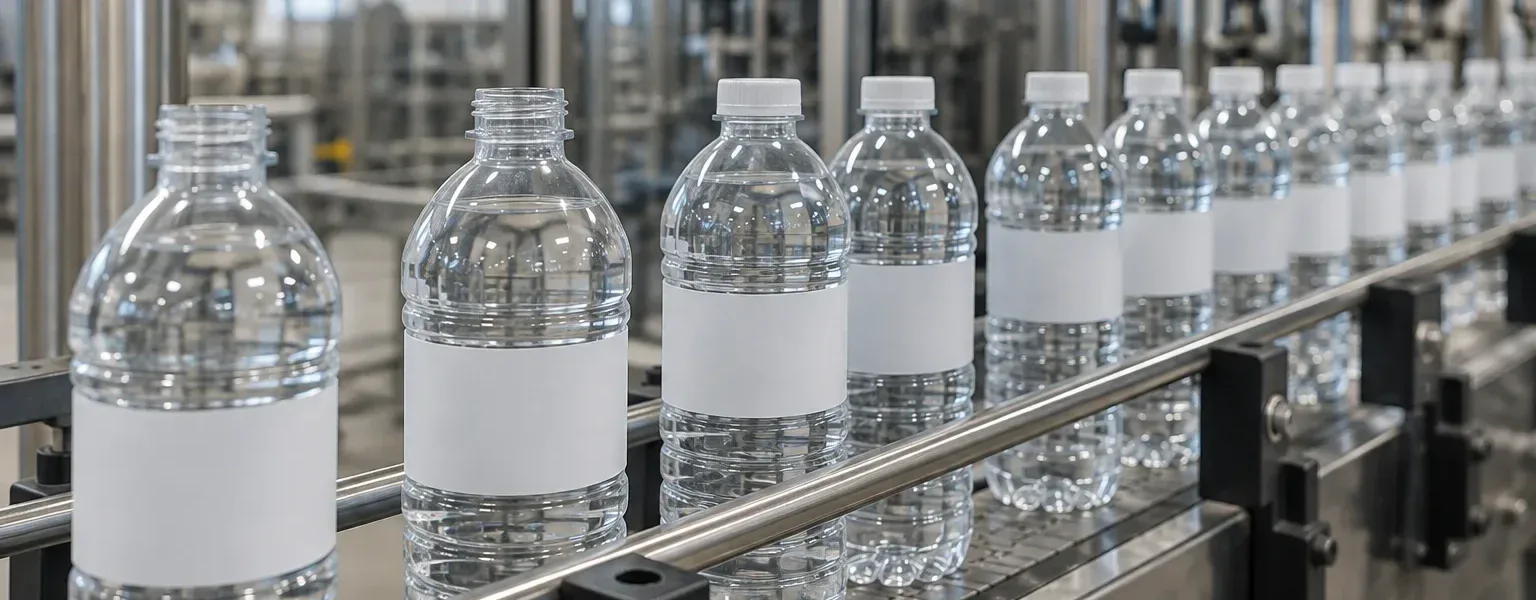
Danone is the last of three drinks companies named in a 2023 consumer complaint to accept that 100% recycled bottle claims cannot cover the whole bottle. On 22 October 2026 the European Commission announced the company’s commitments. Coca-Cola and Nestlé Waters had settled earlier, in June 2025 and February 2026. Under the new rules, a “100% recycled” or “100% rPET” label refers only to the body of the bottle. rPET is recycled PET, the plastic used for drinks bottles. The cap and the label are excluded unless the company can prove the claim for them too. All three companies stress that their commitments are not an admission of any breach. The Commission is now looking at whether other bottlers should follow the same rules.
What the complaint called misleading
The complaint targeted three habits on labels and in advertising. The first was a “100% recycled” claim printed on a bottle whose cap and label were not made from recycled plastic. The second was the risk that virgin PET, or scrap from producing virgin PET, could be counted as recycled content. The third was messaging that hinted at a closed loop, in which every empty bottle comes back as a new one. Coca-Cola and Nestlé Waters had used calls such as “Recycle me again” and “Let’s meet again!”.
BEUC, the European consumer organisation, puts numbers on that gap. It estimates that 55% of PET bottles in the EU are recycled, and that the chance of a PET bottle becoming a bottle again is about 30%. Behind those figures sit the collection, sorting and washing steps described in our guide to PET recycling.
Agustín Reyna, director general of BEUC, put it plainly: “Presenting a bottle as 100% recycled or recyclable is simply misleading and must stop.” In his view, one round number on a label promises more than the bottle and the system behind it can deliver.
Four rules for future labels
The commitments Danone signed spell out what a recycled content claim may say. Coca-Cola and Nestlé Waters had already accepted the same direction. The core rules are these:
- A “100% recycled” or “100% rPET” claim covers only the body of the bottle, without the cap and label, unless the company can prove the figure for those parts as well.
- That limitation belongs inside the claim itself and must be as visible as the percentage.
- Virgin PET and production scrap from virgin PET cannot count as recycled content in a bottle sold as 100% recycled, unless the material went through a recycling process covered by Regulation (EU) 2022/1616, the EU rulebook for recycled plastics that touch food.
- Packaging and advertising must not mislead consumers about environmental features.
The timetable is short for screens and longer for shelves. Digital communication has to change within 3 months of the commitments being adopted. Labels get 18 months, and existing stocks of labels can be used up. Coca-Cola and Nestlé Waters went one step further: they will drop slogans like “Recycle me again” that suggest a closed loop.
How the complaint reached Brussels
The case came through consumer law, not packaging law. In November 2023 BEUC and member organisations from 13 countries filed a complaint with the CPC network, which links the national consumer protection authorities in the EU. ClientEarth and ECOS backed the complaint. Authorities from Hungary and Sweden coordinated the action.
The three companies did not settle at the same time. Coca-Cola concluded its talks with the Commission in June 2025. Nestlé Waters followed in February 2026. Both have already put part of the changes in place, mainly in digital advertising. Danone committed last, and the Commission published its commitments on 22 October 2026.
All three companies point out that the commitments are not an admission of any breach. The outcome is therefore a set of undertakings on future behaviour, which national authorities can now compare with what actually appears on shelves and online.
What changes for the rest of the market
National authorities will monitor how the three companies carry out their commitments. The Commission and the CPC network are also considering talks with industry associations to bring other bottlers under the same rules.
A separate court case adds pressure. At the end of June 2026 a civil court in Paris ruled that the “100% recycled”, “100% recyclable” and “climate neutral” claims for Volvic, a Danone company, were misleading. It awarded 75,000 EUR to the consumer association CLCV. Danone has said it will appeal.
The claims also sit next to counting rules already in force. Implementing Decision (EU) 2026/1425 sets the rules for counting recycled content in PET bottles towards the 25% target under the single-use plastics directive. Under it, PET recyclate from outside the EU generally does not count towards that target until 21 November 2027, although importing it remains legal.
For rPET producers, the practical effect is a heavier paper trail. A bottler that prints “100%” needs proof that the material went through a recycling process covered by Regulation 2022/1616 and did not start as virgin production scrap. It also needs separate evidence for caps and labels, or a caveat as visible as the number. Suppliers who can document origin and process will make those claims easier to defend for any bottler in the EU, whether or not it was named in the complaint.
Frequently asked questions
What does a 100% recycled claim on a bottle cover now?
Under the commitments, a “100% recycled” or “100% rPET” claim refers only to the body of the bottle, without the cap and label, unless the claim is proven for those parts too. The caveat must be part of the claim and as visible as the percentage.
When do the label changes take effect?
Digital communication must change within 3 months of the commitments being adopted. Labels must change within 18 months, and existing labels can be used up.
Did Coca-Cola, Nestlé Waters and Danone admit breaking the law?
No. The companies say their commitments are not an admission of any breach. Coca-Cola concluded talks in June 2025, Nestlé Waters in February 2026, and Danone was the last to commit.